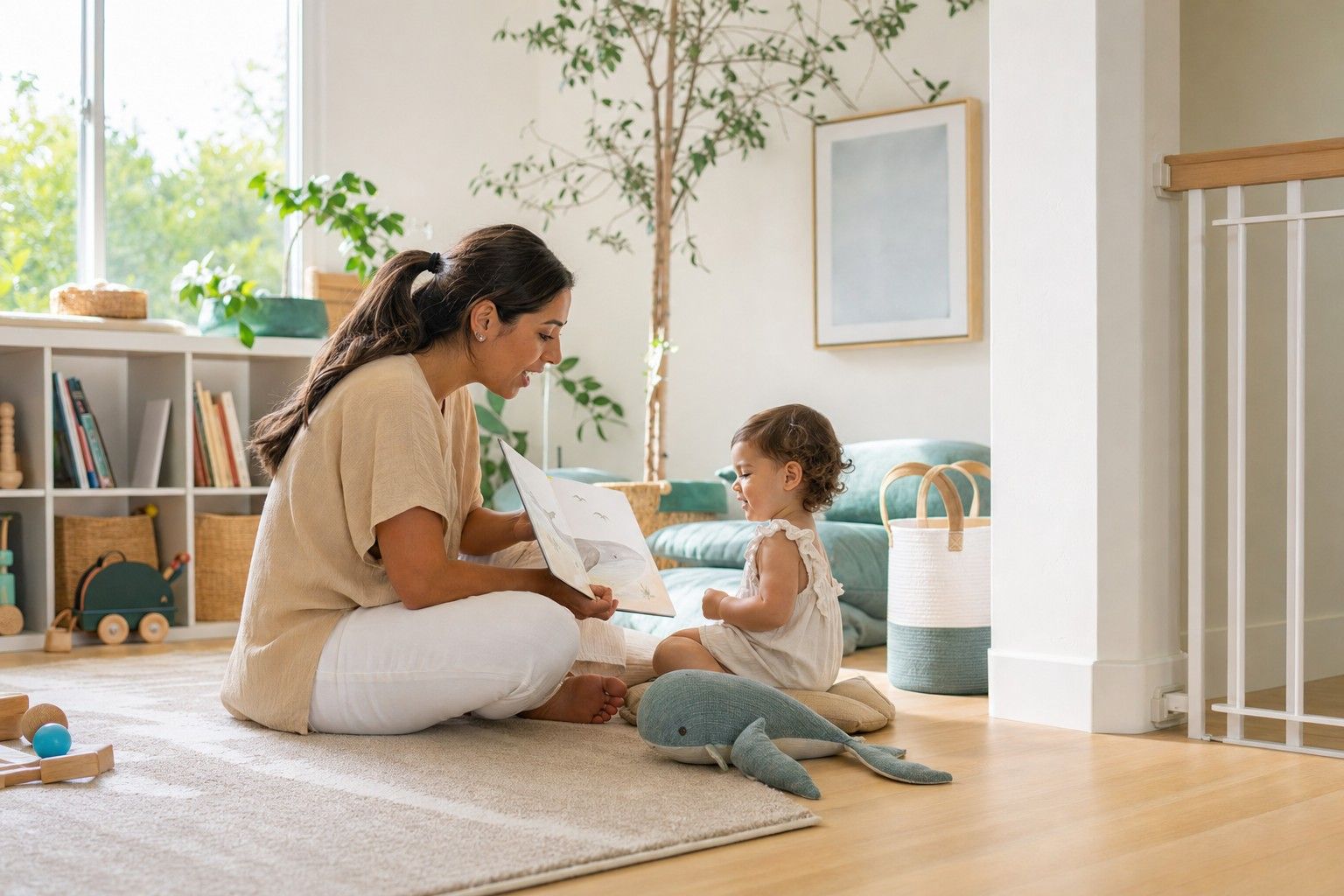
If you run a household for a family, the childproofing project probably lands on your desk. This page is for nannies, house managers, estate managers and other household staff who coordinate childproofing for the family: booking the visit, handling access, keeping the parents informed and making sure the setup keeps pace with the child. We make that job simple, with one point of contact and a written plan you can share.
You also know the house better than almost anyone. Which doors stay open, where the baby naps, which cabinet the toddler already found. That knowledge makes the plan better, so we build it in from the start.
Who this is for
Nannies are often the first to notice that a baby has started rolling, crawling or pulling up on furniture. House managers and estate managers handle vendors, calendars and access for large homes. Executive and personal assistants sometimes manage the project for parents who travel.
This page is for all of them. It’s also useful for families who split care among several people, since everyone needs to understand how the gates and locks work.
What’s different about coordinating childproofing for a family
Decisions belong to the parents, but the daily work belongs to you. That means the plan has to win approval from people who may not be home much, and it has to work for the people who use it every hour. A gate that a parent opens twice a day might be opened dozens of times by a nanny carrying a baby on one hip.
Scheduling is its own puzzle. The visit has to fit around naps, school pickups, family travel and other vendors already booked at the house. Access matters too, from gate codes and alarm systems to pets, parking and which entrance the team should use. If the family has privacy rules, such as no photos or rooms that stay closed, tell us before the visit and we’ll work within them.
The house also keeps changing. A plan that works for a six-month-old needs updates by the first birthday and again when climbing starts. Someone has to keep track of those milestones, and in many households that someone is you.
What we typically install
Everything here is chosen for daily use by busy adults who often have a child in one arm. If a latch is awkward for you, it will get left open, and then it protects nobody.
- One-handed gates. Hardware-mounted gates at stairs with latches you can open while holding a child, and walk-through gates that swing in the direction you need.
- Cabinet and drawer locks. Magnetic locks for kitchens and bathrooms, with key locations written on the plan, plus easier latches on cabinets you open all day.
- Door control. Door knob covers, lever locks and high locks on doors to the garage, the pool area and the front entry.
- Window stops. Stops in bedrooms and upstairs rooms that adults can release quickly.
- Furniture and TV anchors. Straps for dressers, bookcases and TVs, especially in the nursery and playroom.
- Outlet and cord safety. Outlet covers, power strip covers and cord management behind cribs and changing tables.
- Fireplace and hearth guards. Edge padding and screens for any fireplace the child can reach.
How we work with you
You get one contact for scheduling, questions and changes. We book the home safety assessment at a time that suits the household, and we ask for the access details up front: where to park, which door to use, alarm or gate instructions and any pets on site. If a parent can’t be there, they can join by video.
After the visit, you receive an itemized, room-by-room plan to share with the family. It lists each item, where it goes and why, so the parents can approve it quickly. Once they do, we schedule installation around the household’s calendar.
On installation day we show you and anyone else on staff how every gate, lock and stop works, and we mark where keys are kept. Then we set up check-ins as the child grows, timed to crawling, walking and climbing, so you aren’t left guessing what needs to change. Daily use also loosens hardware over time, so each check-in includes tightening gates, replacing worn adhesive locks and moving window stops if the furniture has moved. Our how it works page explains each step.
Related services
Most staff-coordinated projects start with a home safety assessment and include baby gate installation, cabinet and door locks and window safety. Together they cover the parts of the house a crawling or climbing child reaches first.