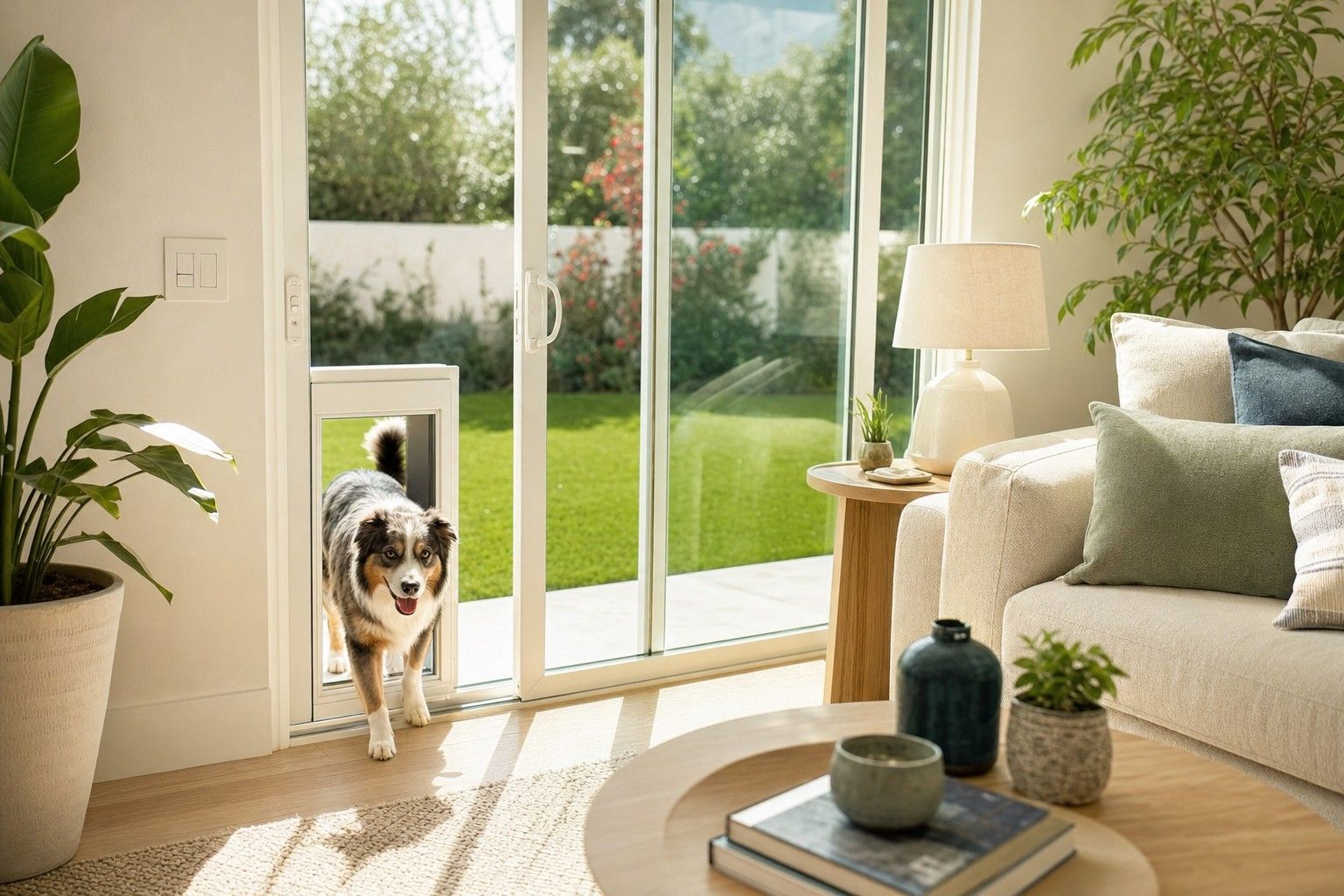
Pet door installation gives a dog or cat its own way in and out, through a flap set into a door or a panel that fits into a sliding glass door track. We fit door-mounted pet doors, sliding glass door dog door inserts and microchip pet doors that let only your pet in. In a home with young children, we also plan where the pet door leads, because a crawling baby can often fit through the same opening a medium-size dog uses.
For many Los Angeles families, the sliding glass door insert is the easiest place to start. It needs no cutting, it comes out when you move, and it fits the sliders found in so many houses here.
Why pet door placement matters
A pet door is an opening in your home’s barrier to the outside, and toddlers notice openings. If the dog can get to the backyard through it, a child may be able to follow. That matters most when the yard has a pool, a slope, a driveway or a gate to the street.
Pools raise the stakes. Drowning kills more children ages 1 to 4 than any other cause, according to the Centers for Disease Control and Prevention (CDC), and the U.S. Consumer Product Safety Commission (CPSC) reports that most fatal child drownings with a known location happened at a residence.
California’s Swimming Pool Safety Act lists exit alarms and self-closing, self-latching devices on doors that open directly to the pool among its drowning-prevention features. A pet door cut into one of those doors creates an opening those features don’t cover. Our guide on California pool safety rules explains the law in plain terms. A pet door can still work in a house with a pool and a toddler, as long as it goes where the pet’s route and the child’s route can be kept apart by a lock, an exit-locking microchip door or a fence.
What we install
- Door-mounted pet doors for wood and fiberglass doors, cut, framed and sealed, with a locking cover for nights and away time.
- Sliding glass door inserts: a full-height panel with a pet flap built in, set into the existing track with no glass cutting.
- Microchip and smart pet doors that let in only a pet with a registered microchip or collar tag. Many let anything push out by default, so for a home with a toddler we choose a model that can also lock the exit.
- Secondary locks for sliding doors with inserts, so the slider can’t be lifted or forced open, which ties into our window safety work on patio doors.
- Wall-mounted pet doors, assessed case by case after we check what’s inside the wall.
- Interior pet doors, such as a cat door into a laundry room that keeps the litter box away from a toddler.
In-glass pet doors, where a round opening is cut into a glass panel, are glazier work, so we refer those to a glass specialist. The same goes for any job that requires replacing a door’s glass unit.
How installation works
We start with the route: where the pet needs to go and where that opening leads. We walk the yard with you to see whether a pool, a slope, a driveway or a side gate is within reach of the pet door, and we decide on the safest spot before anything gets measured.
Then we size the door to the pet. We measure the animal’s shoulder height and widest point, and choose the smallest flap that lets it pass comfortably. A smaller opening is better for keeping children, wildlife and drafts out. The bottom of the flap gets set at a height the pet can step through easily.
For a door-mounted pet door, we mark and cut the opening, frame and seal the edges, and mount the flap with its locking cover. For a sliding glass door insert, we adjust the panel to the exact track height, add weatherstripping and a lock bar, and check that the slider still locks. Microchip doors get programmed with each pet’s chip and tested.
Finally, we show the family how to lock the door, and we suggest keeping it locked whenever a toddler is up and about. Training the pet to use the door is up to you, and a few treats usually help.
Design-friendly and renter-friendly options
Sliding glass door inserts have aluminum frames in white, bronze and black, so the insert blends with the slider you already have. Door-mounted flaps come in white and neutral frames and can be painted on some models to match the door.
Renters have an easy answer in the sliding glass door insert. It’s held in place by the track and a few tension fittings, and it comes out without a mark when you move. Cutting a hole in a rental door, by contrast, needs your landlord’s written permission first. Interior cat doors can often go into a spare interior door that you swap back later.
Pet doors in Los Angeles homes
Sliding glass doors are common across Los Angeles, especially in ranch homes in the Valley and the Conejo Valley, mid-century houses on the Westside and townhomes along the coast. They tend to open straight onto the backyard, and in many of those homes the backyard holds a pool. That makes placement the first question to settle.
Hillside homes add slopes and retaining walls, and a pet door to a side yard may lead to a drop. Coyotes turn up in many canyon and hillside neighborhoods, which is a good reason to choose a microchip door and lock it at night. Exterior walls in much of the city are stucco, which makes wall-mounted pet doors a case-by-case job. The mild climate means pet doors here get used year-round, so seals and weatherstripping matter less for cold than for dust, insects and air conditioning.
Related services
Pet door placement is easiest to plan as part of pet-proofing, where gates, litter boxes and feeding areas get mapped for the whole house. A home safety assessment also checks every door and window that leads toward a pool. For more on raising a puppy with a toddler around, see our guide on puppy-proofing your house.