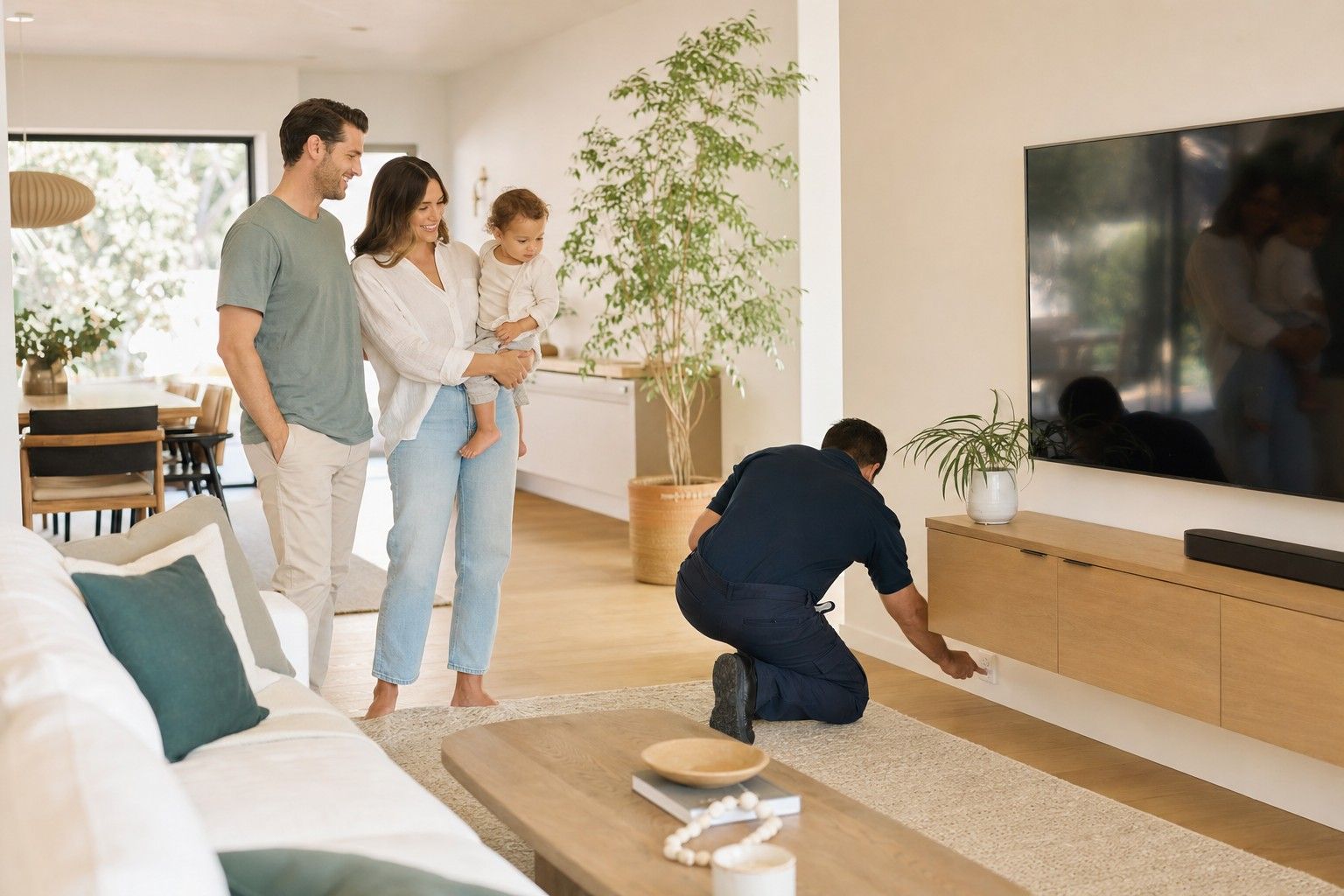
A home safety assessment is an in-home walkthrough of every room, the stairs, the garage and the yard, followed by an itemized, room-by-room childproofing plan for your house. It is where our childproofing service starts, and it suits expecting parents, families with a baby who just learned to crawl, and grandparents getting ready for regular visits. We install from that plan, so the same team that measured your stair opening comes back with the gate that fits it.
The baby product aisle doesn’t know your house. A gate box can’t tell you whether your banister will take a clamp, and a furniture strap kit doesn’t know that the wall behind the dresser is 1920s plaster. The assessment answers those questions before anything is bought or drilled.
Why a home safety assessment matters
Young children get hurt at home in a short list of predictable ways: falls on stairs and from windows, furniture and TVs tipping over, burns, drowning, and swallowing what’s stored under a sink. The U.S. Consumer Product Safety Commission (CPSC) publishes childproofing guidance that runs from cabinet latches and outlet covers to window guards and furniture anchors. The hard part is matching that list to a specific house.
Every home combines hazards differently. A dresser sits under a window, so a climbing child has a ladder to the sill. A pressure gate looks solid at the top of a staircase until a toddler leans on it.
A water heater in the garage was never strapped because the previous owner didn’t know about California’s requirement. Problems like these only show up when someone walks the house with a child’s height and habits in mind.
Timing matters too. Babies change fast, and each new skill opens a new set of risks. Our guide on when to start babyproofing walks through those stages, and the assessment plan is ordered the same way, so the first items on it are the ones your child will reach first.
What we install
The plan covers the whole house, and we install everything on it except work that needs another trade. A typical plan includes some or all of the following.
- Stair gates at the top and bottom of each flight, hardware-mounted at the top, with banister adapters where needed.
- Anti-tip anchors for dressers, bookcases, armoires and TVs, set into studs or masonry.
- Cabinet, drawer and appliance latches for the kitchen, bathrooms and laundry room, including hidden magnetic locks.
- Window stops that limit openings, and bedroom window guards that release from inside in an emergency.
- Clear acrylic shields or mesh netting on railings with wide gaps or horizontal bars.
- Padded hearth guards and fireplace gates, plus locks or covers on gas keys, switches and remotes.
- Sliding outlet covers that close on their own, enclosures for power strips, and tidy, out-of-reach cords.
- Water heater strapping, earthquake latches, and hanging hardware that keeps art and mirrors on the wall.
- Gates with pet doors, balcony netting and pet door placement when animals share the house.
Pools are the exception. We point out pool-area risks during the walkthrough, but we don’t install pool fences, because that work needs a specialty contractor license in California. Our California pool safety rules guide explains what the state requires and where a licensed fence contractor comes in.
How installation works
- You book a visit and tell us the basics: due date or child’s age, pets, the type of home and any rooms you’re worried about.
- We walk the house together. We go room by room at a toddler’s eye level, open drawers, test existing gates, locate studs, and note wall and floor materials such as plaster, tile, stone and concrete.
- You get the itemized plan. Each item lists the device, its location, the reason for it and the finish options, and the list is ordered by when your child is likely to reach it.
- We install on a scheduled visit. Each device is tested after it goes in, and we show every adult in the house how to open the latches and gates, including anyone else who cares for your child.
- As your child grows, we can revisit. A climbing three-year-old needs different things than a crawling nine-month-old.
If you’d like a head start, our childproofing checklist lists the most common items by age. It makes a useful companion to the plan, and any questions it raises are good ones to bring to the visit.
Design-friendly and renter-friendly options
Childproofing can stay out of sight in a house you’ve worked hard to furnish. We recommend magnetic cabinet locks that sit inside the door, clear acrylic railing shields where mesh would hide a handsome railing, and gates chosen to match wood trim, black iron or white paint. Furniture anchors go behind the piece, where nobody sees them.
Renters and condo owners get options that leave little or no trace. Banister adapters clamp on instead of screwing in, adhesive latches work on cabinets you can’t drill, and stud-mounted anchors leave small holes that patch easily when you move out. If your HOA or landlord has rules about balconies or exterior doors, we plan around them and note which items need their sign-off.
Safety assessments in Los Angeles homes
Los Angeles housing runs from prewar bungalows to glass-walled new builds, and the assessment adapts to each. Hillside homes in places like the Hollywood Hills and Los Feliz often have several short flights of stairs, open risers and decks over a drop. Older Spanish Revival houses bring plaster walls, tile stairs and wrought-iron railings that need specific anchors. Mid-century homes have open floor plans and walls of glass that open onto patios and pools.
Earthquakes are part of every plan here. California Health and Safety Code §19211 requires water heaters to be braced, anchored or strapped against falling or moving in an earthquake, and the same visit that anchors a nursery dresser can strap the water heater in the garage. Tall furniture, TVs and heavy art all get the same scrutiny.
Pools are common in the Valley, the Conejo Valley and on the Westside. The Centers for Disease Control and Prevention (CDC) reports that more children ages 1 to 4 die from drowning than from any other cause, so we pay close attention to every door, window and pet door that leads toward water. Under the California Swimming Pool Safety Act, as updated by SB 442, a new or remodeled pool at a single-family home needs at least two of seven listed drowning-prevention features when the building permit is issued. We flag gaps for you to take to a pool contractor.
Families rebuilding in the Palisades or Altadena after the January 2025 fires can plan childproofing while the walls are still open. We can mark where gates and anchors will go so blocking gets added before the drywall closes.
Related services
Baby gate installation and furniture and TV anchoring tend to lead the plan, since stairs and tip-overs are the first hazards a mobile baby meets. In Los Angeles, it makes sense to add earthquake safety work in the same visit, because water heater straps and cabinet latches use the same tools and the same stud map.