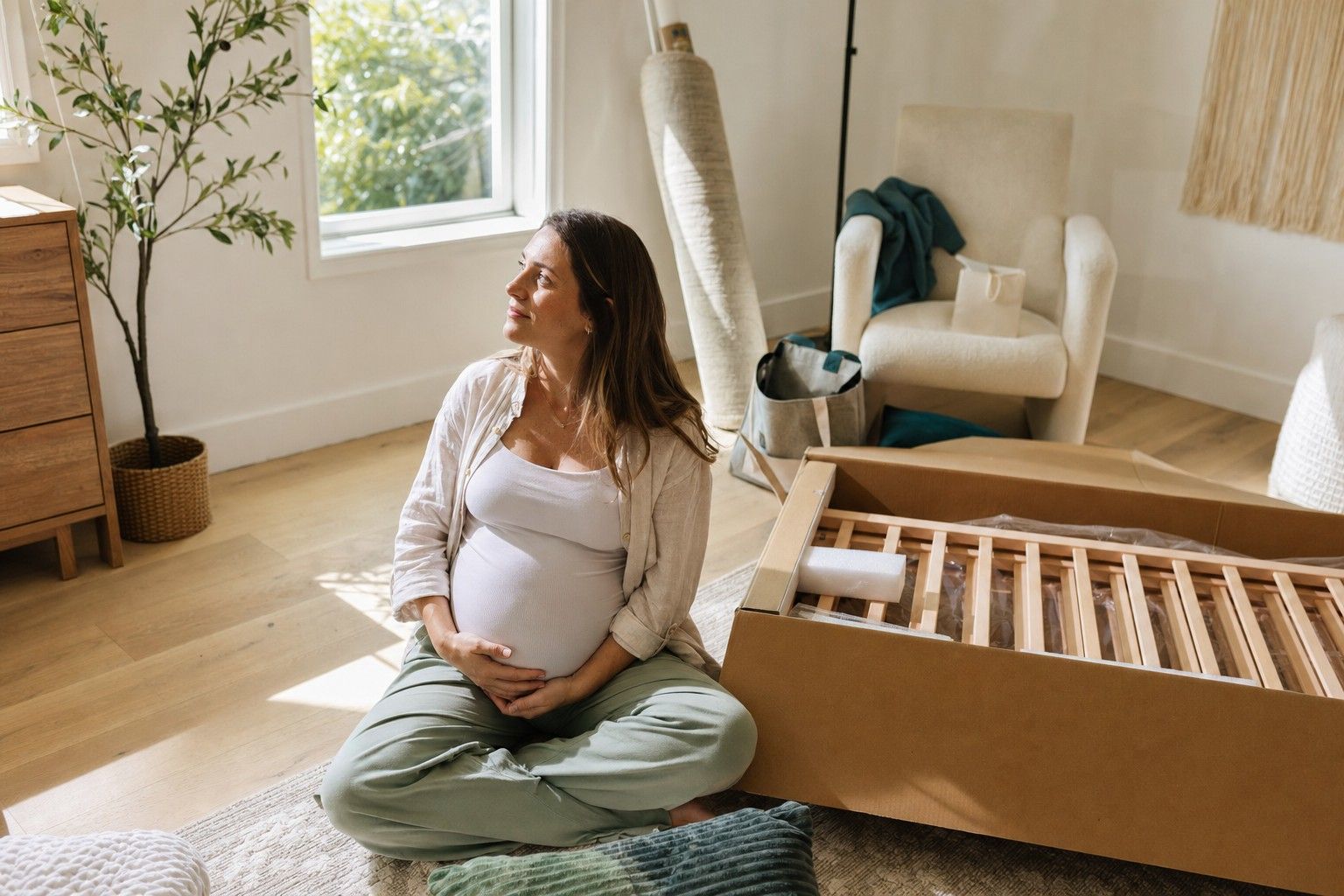
The best time to start babyproofing is during pregnancy, ideally in the second or third trimester, with the jobs that involve drills and heavy furniture: anchoring, smoke and carbon monoxide alarms, and a safe nursery. Gates, cabinet latches and outlet covers can wait until a few weeks before your baby starts to crawl, which the American Academy of Pediatrics (AAP) says is usually mastered between seven and ten months. For parents asking when to start baby proofing, splitting the work this way keeps the house livable and the baby protected at each stage.
When to start babyproofing, and why timing matters
Babyproofing done too late means installing gates with a crawler underfoot and drilling during nap time. Done too early, it means living with cabinet latches for six months before anyone needs them. Splitting the job into two phases avoids both problems.
The first phase covers things a newborn is exposed to from day one, plus anything that involves heavy lifting or a power drill. The second phase covers things that only matter once your baby can move. You plan both at the same time, then install them on different dates.
What to do during pregnancy
These are the items worth finishing before your due date. Most of them are easier to do while the house is quiet and you can still move furniture around without a baby to watch.
Anchor furniture and TVs
The U.S. Consumer Product Safety Commission (CPSC) runs a campaign called Anchor It, which states that anchoring all furniture with drawers, doors and shelves to the wall prevents tip-over injuries and deaths. Do the nursery and your bedroom first, then the family room. Dressers, bookcases, TV stands and the TV itself are the pieces to start with.
Anchoring before the birth also means one round of drilling, dust and patching. Once the baby is home, those same jobs compete with feeds and naps.
Check smoke and carbon monoxide alarms
The CPSC recommends smoke alarms on every level of the home, inside each bedroom and outside sleeping areas, and carbon monoxide alarms outside bedrooms near each sleeping area. Test them monthly. If your nursery is a converted office or guest room, it may not have a smoke alarm yet.
California law also applies here. Health and Safety Code section 17926 requires owners to install a State Fire Marshal-listed carbon monoxide device in dwelling units that have a fossil fuel burning heater or appliance, a fireplace, or an attached garage. Many Los Angeles houses fit that description, with a gas water heater in the garage or a fireplace in the living room.
Set up the nursery for safe sleep
The AAP’s safe sleep guidance is short and specific. Place your baby on their back on a firm, flat surface, in a crib, bassinet, portable crib or play yard that meets CPSC safety standards, with a fitted sheet and nothing else. The AAP also recommends sharing a room with your baby for at least the first six months, so the sleep space in your own bedroom needs the same care.
Around the crib, the CPSC recommends cordless window coverings in homes with young children. Keep the crib clear of windows and blind cords, anchor the dresser and changing table, and leave the wall above the crib bare. In an earthquake region, a framed print over the crib is a hazard you can remove in a minute.
A pregnancy checklist
- Anchor dressers, bookcases, the changing table and TVs in the nursery, your bedroom and the family room.
- Confirm working smoke alarms on every level, in each bedroom and outside sleeping areas.
- Install carbon monoxide alarms outside bedrooms, especially in homes with gas appliances, a fireplace or an attached garage.
- Set up a crib or bassinet that meets CPSC standards, with a firm mattress and a fitted sheet only.
- Swap corded blinds near the crib for cordless window coverings.
- Turn the water heater down to 120°F or lower, the setting the CPSC recommends to reduce scald risk.
- Measure your stairways and note what each side of the opening is made of, so gates can be planned.
What can wait until your baby is on the move
Gates, cabinet and drawer latches, outlet covers, toilet locks, stove knob covers and door knob covers all solve problems a newborn doesn’t have yet. Install them too early and every adult in the house fights them for months.
The exception is planning. Stairs with a round newel post, a stone wall or an unusually wide opening may need adapter kits or custom parts, and it helps to know that before you need the gate. Measuring and choosing during pregnancy, then installing later, gives you time to pick hardware that matches your railing.
Window stops, refrigerator locks and higher latches belong to a later phase still. Those go in once your child starts climbing and dragging chairs over to the counter. Our childproofing checklist by age breaks down each of those later rounds room by room.
Signs your baby is about to start moving
You don’t need to guess from the calendar. A baby who rocks on hands and knees, pivots in circles on their tummy or scoots backward across the rug is close to crawling. That is the signal to finish phase two.
The AAP’s milestone guidance notes that some babies never crawl in the classic way and scoot or shuffle instead, which is normal if the movement is coordinated. For babyproofing, the method doesn’t matter. Once your baby can reach the far side of a room alone, the gates and latches should already be in.
Pulling up comes next. The AAP describes babies pulling to stand every chance they get in the months before walking, and they use furniture to do it. That is why anchoring belongs in phase one, well before your baby can grab a drawer handle.
Why booking before crawling helps
An assessment booked before your baby is mobile gives you weeks to read the itemized plan, decide what you want done and when, and choose finishes that work with your home. The installs then happen on your schedule.
- Installation happens while you can still leave the baby with a partner or grandparent in another room.
- Gates for banisters, stone walls or wide openings can be ordered and fitted to your stairs before your baby needs them.
- You can phase the work: anchoring and alarms now, gates and latches closer to crawling.
- You learn how each latch and gate opens before you are doing it one-handed with a baby on your hip.
Starting babyproofing in a Los Angeles home
A few local details change the timing. Homes with a pool or spa should have door alarms and latches on doors facing the water in place before your baby can crawl to the slider, because the CPSC calls for layers of protection around pools. We don’t install pool fences, though we point out pool-area risks during the assessment.
Earthquake prep overlaps with phase one. Anchoring furniture to studs protects against both a toddler tip-over and a strong shake, so doing it during pregnancy covers two risks with one visit. Multi-level and hillside homes with long stair runs simply need more gates and railing work, which is another reason to plan early.
When to call a professional
Some families do every step themselves. Others hand off the drilling-heavy items, like anchoring into plaster or masonry and mounting gates on banisters, and do the latches and outlet covers on their own.
If you want a plan built around your home and due date, book a home safety assessment. We walk each room with you and produce an itemized plan, split into what to do now and what to do before crawling. You can read more about the visit on how it works. When your baby gets closer to moving, we can fit baby gates for every stairway and anchor the remaining pieces through our furniture and TV anchoring service.
Sources
- Movement Milestones in Babies 8 to 12 Months Old, HealthyChildren.org (American Academy of Pediatrics)
- How to Keep Your Sleeping Baby Safe: AAP Policy Explained, HealthyChildren.org (American Academy of Pediatrics)
- Childproofing Your Home: Several Safety Devices to Help Protect Your Children from Home Hazards, U.S. Consumer Product Safety Commission
- California Health and Safety Code Section 17926, California Legislative Information
- Anchor It, U.S. Consumer Product Safety Commission