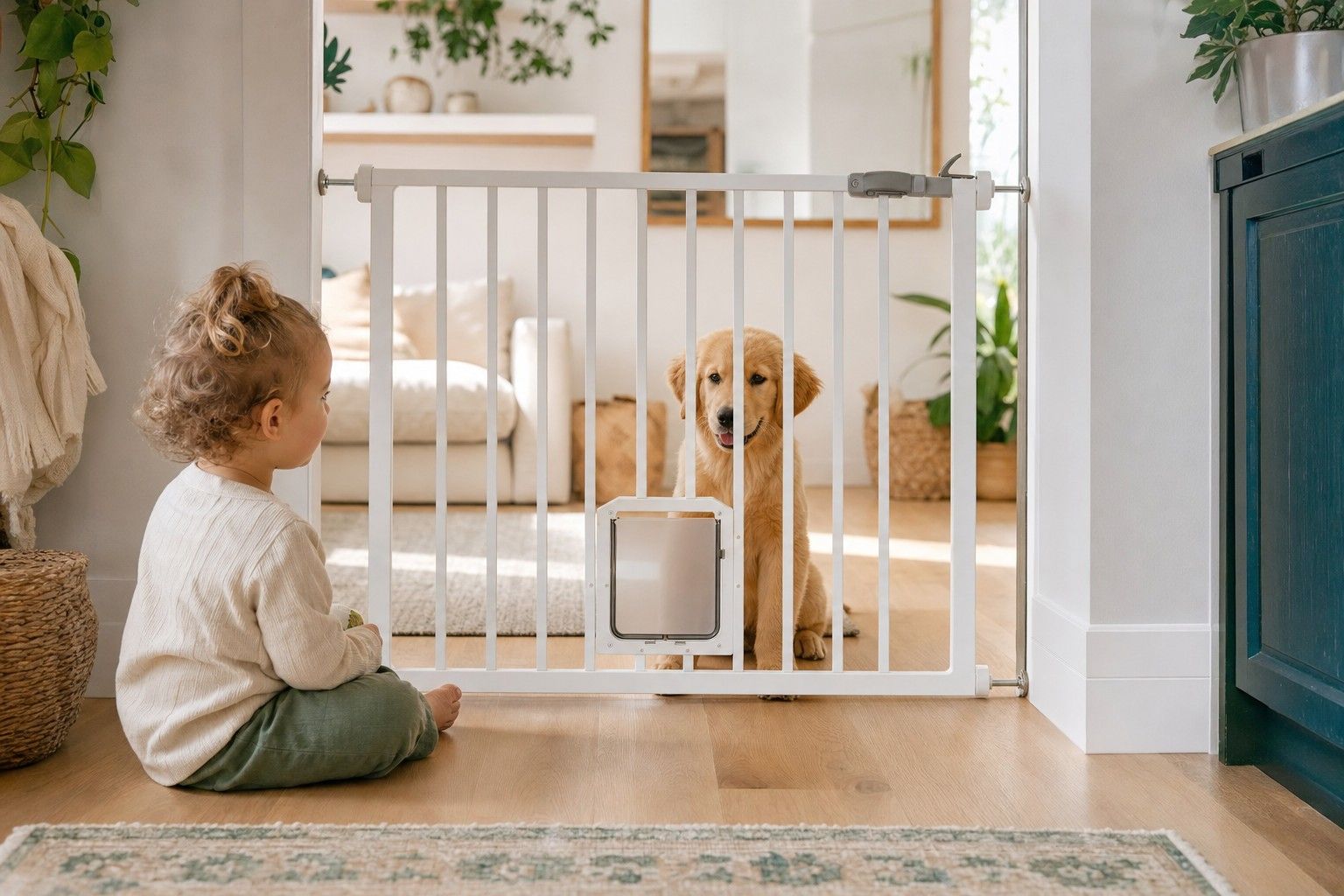
Pet-proofing a home with a baby or toddler gives pets and children separate spaces the other can’t reach: a gate the cat can pass through but a toddler can’t, a litter box behind a door, a balcony the cat can’t jump from. The usual toolkit is child safety gates with built-in pet doors, extra-tall gates for dogs that jump, latches for pet food and supplies, and cat-safe netting for balconies. It’s built for households where a dog or cat got there first and a baby is on the way.
Pets and babies can share a house well. The setup has to work for both of them at once, and for the adults moving through it all day.
Why pet-proofing matters
The risks run in both directions. A curious toddler grabs a tail, crawls into the dog’s bed or eats from the food bowl, and even a gentle dog can react to a surprise. A cat may climb into a crib or knock things off a changing table. Pet food, treats, medications and litter are all within a crawling child’s reach unless someone moves them.
The U.S. Consumer Product Safety Commission (CPSC) says pet gates should never be used as child safety gates. When a home needs one gate for both, it should be a child safety gate that happens to include a pet door.
Expecting parents with a cat have one more consideration. The Centers for Disease Control and Prevention (CDC) advises people who are pregnant to have someone else change the cat litter if possible, and to wear disposable gloves and wash their hands if no one else can. Moving the litter box to its new spot before the baby arrives gives the cat time to adjust and makes it simple for someone else to take over.
What we install
- Child safety gates with a built-in pet door, so a cat or small dog can pass while a toddler can’t.
- Extra-tall gates for dogs that clear standard gates, mounted into framing like any other gate.
- Zone gates that set up a dog area away from the nursery and the baby’s play space, often across a kitchen or hallway.
- Adjustable door straps that hold a door open just wide enough for a cat, to keep a litter room or feeding room off-limits to a toddler.
- Cabinet latches for pet food, treats and medications, plus latches on bins where food is stored.
- Cat-safe balcony and window netting for condos, apartments and homes with upper-floor decks.
- Cord management for chewing puppies and kittens, which protects a crawling baby at the same time.
- Planning for pet door installation when a dog door needs to coexist with a toddler.
How installation works
We meet your pets during the visit, at least briefly. Their size, how high they jump and whether they squeeze through gaps all affect which gate and which pass-through size will work. A 10-pound cat and an 80-pound retriever need very different setups.
Then we map the house into zones. The nursery and the baby’s floor-play area come first. Next we decide where the dog sleeps and eats, where the cat’s litter, food and climbing spots go, and which doorways need gates. The goal is a layout where pets can still reach their essentials without crossing through baby territory.
Gates go in the same way as any baby gate installation: hardware-mounted at the top of stairs, measured to the opening, tested for latching. Pass-through doors get tested with the actual pet. Balcony netting is tensioned on poles or clamps fixed to the balcony frame and checked for gaps at the corners and the floor, where a determined cat will look first. Our guides on puppy-proofing your house and cat-proofing your home cover the pet side in more detail.
Design-friendly and renter-friendly options
Gates with pet doors are made in white, black and wood finishes, and extra-tall gates can still look clean when the finish matches nearby trim. Cat netting in black or a clear-look mesh is hard to notice from inside and nearly invisible from the street.
For renters and condo owners, balcony netting can go up with tension poles and clamps that don’t drill into the building. Door straps and adhesive cabinet latches leave no marks. Gates in hallways and doorways can often be pressure-mounted when they’re away from stairs, which avoids holes entirely. If your HOA has rules about balconies, we’ll help you describe the setup to them before anything is installed.
Pet-proofing in Los Angeles homes
Los Angeles has a large share of renters and condo owners, and plenty of apartments and condos come with a balcony the cat wants to use. Many high-rise and mid-rise buildings in areas like Marina del Rey, Westwood and Century City have balconies, and a railing built for people rarely stops a cat. The Animal Medical Center in New York, whose veterinarians use the term high-rise syndrome for the injuries cats suffer in falls from high places, advises keeping pets off open balconies. Netting lets the cat use the balcony anyway.
In hillside neighborhoods and canyons, coyotes are a familiar part of life, which keeps many cats indoors and makes secure yards and pet doors a bigger question for dog owners. Many backyards in the San Fernando and Conejo valleys have pools, and a pet door that opens toward a pool needs careful planning when a toddler lives in the house.
Many homes also have open floor plans with no doors between the kitchen, dining and family rooms. Zone gates there have to span wide openings and still look good, so we lean on panel gates in finishes that match the room. Multi-level homes may need stair railing guards as well, since the same railing gaps let a cat or a child through.
Related services
Pet-proofing shares hardware and planning with baby gate installation, and the two fit naturally in one visit. Dogs that use the yard may also need pet door installation, placed so a toddler can’t follow the dog outside. For lofts and stairwells, stair railing guards close the gaps both pets and children can slip through.