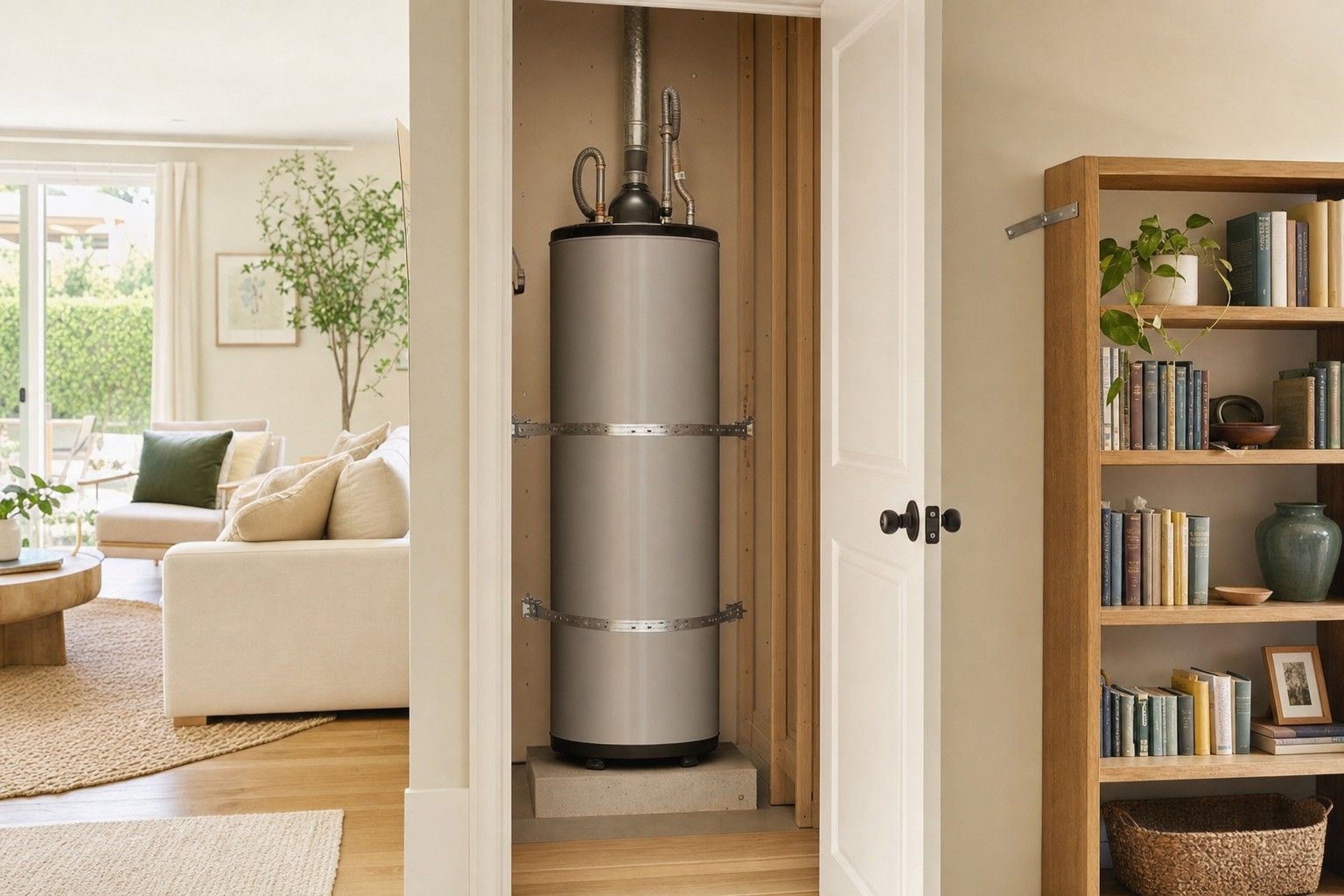
Earthquake proofing a home with young children is mostly about fastening down what can fall, slide or spill in strong shaking: the water heater, tall furniture, TVs, cabinet contents, mirrors and art. We strap water heaters, anchor furniture into studs, add latches that keep cabinet doors shut, and rehang heavy pieces on secure hardware. Much of that work also prevents toddler tip-overs, so it fits naturally into the same visit as childproofing.
The work is all inside the house and needs no construction. Structural retrofits, such as foundation bolting or soft-story work, call for an engineer and a licensed contractor, and they’re outside what we do.
Why earthquake proofing matters
The U.S. Geological Survey (USGS) puts the probability of a magnitude 6.7 earthquake in the Los Angeles region within the next 30 years at 60 percent. Nobody can say when, but families here can decide what will be standing, hanging or swinging open when it happens.
Inside a house, the hazards you can address are the things that move. A tall bookcase in a playroom, a TV on a low console, a framed mirror over a dresser, and a kitchen cabinet full of glass all respond to shaking the same way: they slide, tip or fly. Young children can’t brace themselves or get out of the way quickly, which is why their rooms come first.
Water heaters deserve their own mention. Under California Health and Safety Code §19211, water heaters must be braced, anchored or strapped so they can’t fall or move in an earthquake. A gas water heater that tips can strain its gas and water connections, and in the garage it often sits near cars, storage and the door the family uses most.
What we install
- Water heater strapping with two straps, one in the upper third of the tank and one in the lower third, fastened into studs or masonry.
- Furniture and TV anchors for dressers, bookcases, armoires, media consoles and wall-mounted TVs, handled through our furniture and TV anchoring service.
- Earthquake cabinet latches for kitchens, pantries and display cabinets, so doors stay shut and dishes stay inside.
- Secure hanging for art and mirrors, using closed hooks, security hangers and D-rings fastened into studs, so pieces can’t hop off the wall.
- Museum putty and gel for vases, sculptures and framed photos on shelves and mantels.
- Anchors for garage and pantry shelving units, which are often tall, loaded and close to the water heater.
- Refrigerator straps for tall or built-in-style refrigerators where the cabinetry doesn’t already hold them.
Automatic seismic gas shutoff valves aren’t on the list. Installing one means working on the gas line, which is a licensed plumber’s job, so we note whether you have one and leave the work to a plumber.
How installation works
Bedrooms and play areas come first. Anything above or beside a crib, a bed or a play mat gets checked before anything else, since that’s where a child is most likely to be when shaking starts at night or during a nap. Then we check hallways and exits, the kitchen and the garage.
The water heater gets strapped to the pattern the Los Angeles Department of Building and Safety (LADBS) describes: at least two straps, one in the upper third and one in the lower third, with the lower strap at least 4 inches above the controls. LADBS also notes that lag screws should go well into a wall stud and that perforated plumber’s tape isn’t acceptable on water heaters over 40 gallons. We check the gas and water connectors while we’re there and flag any that look rigid so a plumber can replace them with flexible ones.
Furniture anchors go into studs or masonry, never drywall alone. Cabinet latches get chosen to fit the cabinet construction and tested by hand. For art and mirrors, we find the stud, mount closed hardware and make sure each piece sits tight against the wall. Our guide on water heater strapping in California covers the requirement in more detail.
Design-friendly and renter-friendly options
Most earthquake work disappears once it’s done. Furniture straps sit behind the piece, cabinet latches mount inside the doors, and security hangers look like any other picture hook from the front. Museum gel is clear and comes off cleanly from most hard, nonporous surfaces.
In a rental, the water heater belongs to the landlord, so ask them before anyone touches it, and share the state requirement if it isn’t strapped. Furniture anchors leave a couple of small holes that patch easily. Museum putty, adhesive cabinet latches and tension straps for appliances are all low-impact options for renters.
Earthquake proofing in Los Angeles homes
Housing across Los Angeles meets earthquakes in different ways. Spanish Revival and Craftsman houses built before World War II usually have plaster walls that need care when drilling for anchors and art. Postwar ranch homes in the Valley often keep the water heater in an attached garage, next to tall storage shelving that needs anchoring too. High-rise condos have concrete walls, which take masonry anchors, and upper floors can sway more than the ground.
Hillside homes add multi-level layouts and long stair runs, where a falling object can travel. Homes being rebuilt after the January 2025 fires in the Palisades and Altadena are a chance to plan ahead, since blocking for anchors can go into open walls before drywall closes. Our guide on earthquake-proofing a home with kids goes further on preparing a family home.
Related services
Earthquake work overlaps most with furniture and TV anchoring, since the same straps serve both purposes. Kitchen and pantry latches are the same ones we fit as cabinet and door locks, and a home safety assessment folds earthquake items into one whole-house plan alongside gates and window stops.