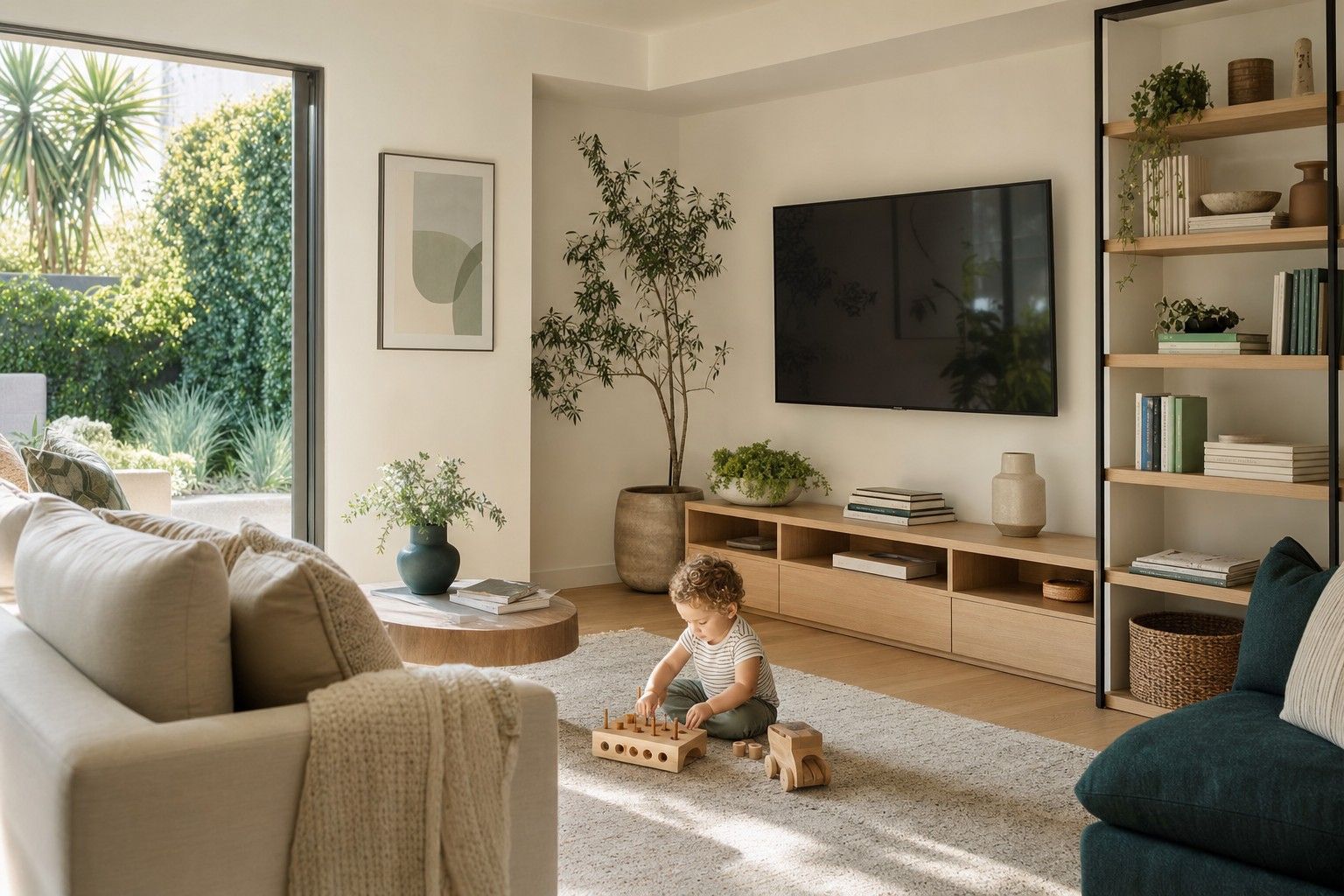
Earthquake proofing a home with kids starts in the rooms where they sleep and play. Keep anything heavy off the wall above the crib or bed, anchor dressers and bookcases to studs, latch cabinets, and strap TVs and hang art on closed hooks. Then strap the water heater and make a family plan that everyone who cares for your child has practiced.
Why earthquake proofing starts in the nursery
Young children spend long stretches of the day and night asleep, often in rooms with a tall dresser, a shelf of books and framed art. Ready.gov tells adults who are in bed during an earthquake to turn face down and cover their head and neck with a pillow. A baby in a crib can’t do any of that, so the room around the crib has to be safe on its own.
The Earthquake Country Alliance (ECA) puts “Secure Your Space” first in its Seven Steps to Earthquake Safety. Its advice includes moving furniture such as bookcases away from beds, sofas and other places where people sit, sleep or spend a lot of time. For a child, that means the crib, the toddler bed, the reading corner and the play mat.
Earthquake proofing checklist for nurseries and kids’ rooms
Walk into your child’s room and look up first, then out to the sides. Anything that could fall, slide or swing toward the bed is on this list.
- Leave the wall above the crib or bed bare of shelves, mirrors and framed art.
- Place the crib or bed away from windows and from tall furniture, against an interior wall where the layout allows.
- Anchor the dresser, changing table, bookcases and toy shelves to wall studs, as the ECA recommends for any top-heavy furniture.
- Move bookcases so they can’t fall toward the crib or bed.
- Put heavy books, bins and baskets on the lowest shelves.
- Hang the art you keep on closed hooks, which the ECA recommends for mirrors and pictures, and choose light frames with acrylic instead of glass in kids’ rooms.
- Fasten wall shelves into studs, and keep only light, soft things on them.
- Swap a heavy table lamp for a wall sconce or a lamp with a wide, weighted base.
- Keep a flashlight and a pair of shoes by your own bed, so you can get to your child across a floor that may have broken glass.
None of this has to change how the room looks. Anchors sit behind the furniture, and closed hooks hide behind the frames.
Latches, TVs and art in the rest of the house
Once the bedrooms are done, the same ideas carry through the rest of the house. The ECA’s list for securing your space is short: secure top-heavy furniture and appliances to wall studs, secure TVs and computers with straps, install latches on kitchen cabinets, hang mirrors and pictures on closed hooks, and move heavy objects to lower shelves.
Kitchen and pantry
Cabinet latches do double duty in Los Angeles. A latch that stops a toddler from reaching the dishwasher pods also keeps a cabinet door shut while dishes slide inside it. Hidden magnetic locks work well on custom cabinetry because nothing shows on the outside.
There is one real tension to manage. Earthquake advice puts heavy things low, while childproofing puts dangerous things high. The answer is to keep heavy and breakable items, such as cast iron, glass bowls and appliances, on low shelves behind latched doors, and to keep cleaning products and medicines up high in locked cabinets.
TVs, electronics and tall appliances
Ready.gov lists bookcases, refrigerators, water heaters and televisions among the heavy items to secure. Wall-mount TVs into studs or strap them to an anchored stand. Refrigerators can be held to the wall behind them with appliance straps. Our guide on anchoring furniture and TVs covers studs, plaster and masonry in detail.
Mirrors, art and decor
Large mirrors and heavy frames over the sofa deserve the same thinking as the crib wall, since children nap and play there. Closed hooks keep frames from bouncing off the wall. Small breakable objects on open shelves can be held down with museum putty, or moved behind a cabinet door.
The water heater and the garage
California Health and Safety Code §19211 requires residential water heaters to be braced, anchored or strapped to resist falling or sliding in an earthquake. The ECA’s guidance is to secure the water heater to wall studs with two metal straps. Our water heater strapping guide explains what the law requires and where the straps go.
Garages often hold the heaviest loose items in the house: shelving loaded with bins, paint, tools and pool chemicals. Anchor tall shelving units to studs, keep heavy items on the lowest shelves, and store chemicals in a latched cabinet. If your children walk through the garage to the car each day, this space matters as much as the playroom.
Make a family earthquake plan with kids
The ECA’s second step is to plan to be safe. Its list fits family life well:
- Identify safe spots in every room, such as under sturdy desks and tables.
- Choose a meeting place outside the home for after the shaking stops.
- Designate an out-of-area contact person whom everyone in the household can call to relay information.
- Practice Drop, Cover, and Hold On.
- Learn the earthquake plan at your child’s school or daycare, and keep their emergency release card current.
- Keep copies of essential documents, such as identification and insurance policies, in a waterproof container with your supplies.
Ready.gov adds a supply kit with enough food and water for several days, a flashlight, a fire extinguisher and a whistle. For a baby or toddler, add diapers, wipes, formula or food, bottles, medicines and a comfort toy.
Talk with your children about earthquakes before one happens, as the ECA suggests, and let older kids help build the plan. Share it with the nanny, the house manager and the grandparents too, since an earthquake can just as easily strike while you are at work.
Earthquake proofing in Los Angeles homes
Hillside homes often have tall windows, split levels and long sightlines with glass railings, so crib and bed placement deserves extra thought. Older Spanish Revival and Craftsman houses bring plaster walls and brick fireplaces. In those homes, keep the crib and play area away from the hearth and use anchors made for plaster or masonry.
High-rise condos need the same contents work, with fasteners suited to concrete walls and metal studs. Families rebuilding after wildfire, or planning a major remodel, have a chance to add solid blocking inside the walls before the drywall goes up, which makes every future anchor stronger. Our page on new construction and remodels explains how that works. Foundation bolting and structural retrofits are a separate job for an engineer and a general contractor.
When to call a professional
Most families can hang art on closed hooks and move a bookcase on their own. Anchoring furniture into plaster or masonry, strapping a water heater correctly, and latching custom cabinets without marking them are where the right hardware pays off.
Our earthquake safety service handles water heater strapping, appliance straps and cabinet latches, and our furniture and TV anchoring service secures dressers, bookcases and TVs into the right material. Both can happen on the same visit as your childproofing, so one walk-through covers toddler hazards and quake hazards together.