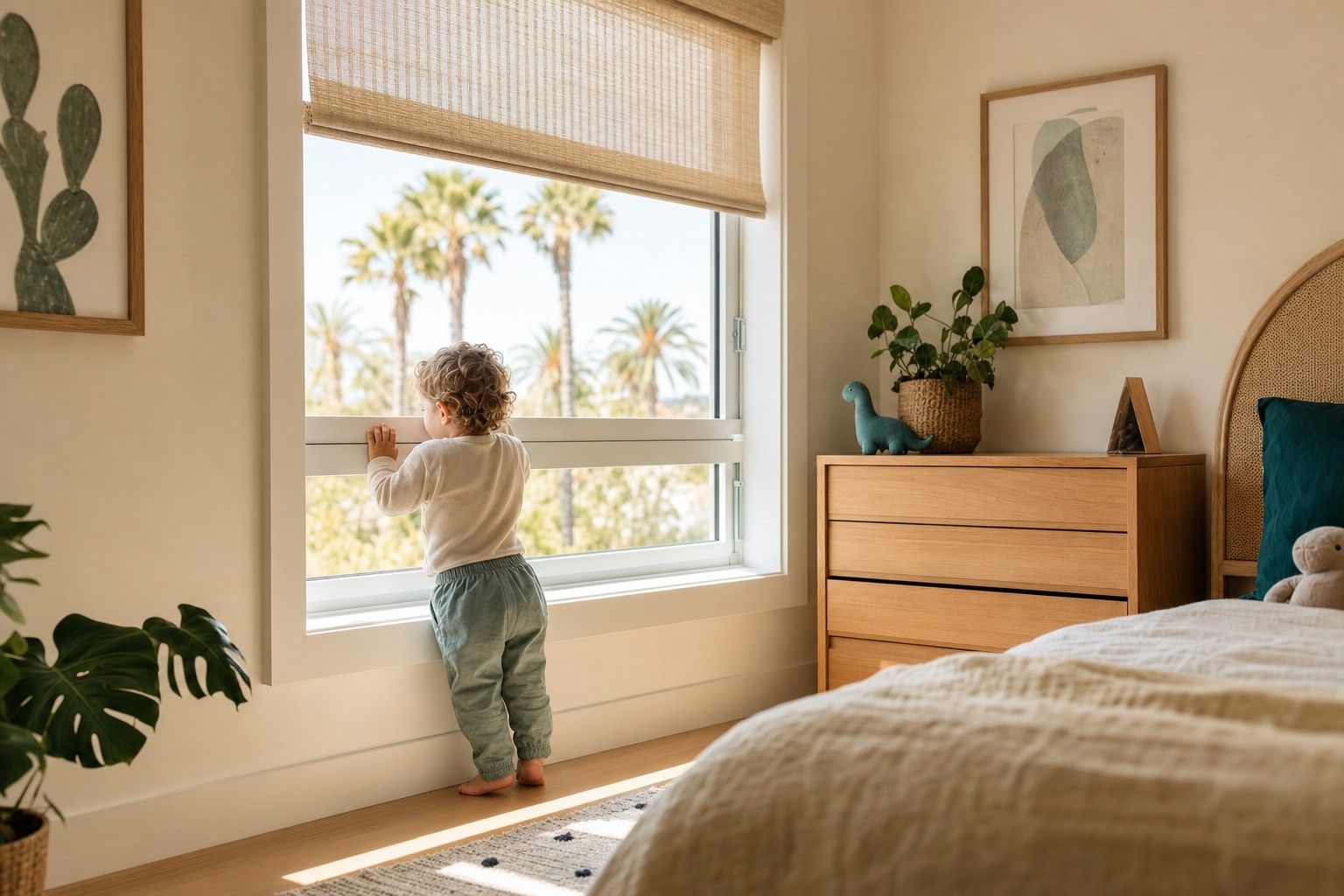
Window safety in a house with young children comes down to two hazards: falls through an open window, and strangulation in the cords of blinds and shades. We install window stops that limit how far a window opens, window guards that adults can release in a fire, cord fixes for existing window coverings and locks for sliding patio doors. Window stops are usually the place to start, especially in second-story bedrooms and nurseries.
The hardware is small. Once installed, it lets you keep windows open on warm nights without listening for footsteps near the sill.
Why window safety matters
The U.S. Consumer Product Safety Commission (CPSC) estimates that 5,600 children 12 and under were treated in emergency departments for window falls in 2024. It also says never to depend on screens to keep children from falling out. A screen is a light frame held in by small clips, designed to stop insects, and it can pop out under the weight of a leaning child.
Cords are the quieter hazard. The CPSC urges families to buy and install cordless window coverings in every room where a child may be present, because pull cords and continuous loops can wrap around a young child’s neck. Cribs, beds and toy chests placed under a window make both problems worse, since they give a child a step up to the sill and the cords.
What we install
- Window stops and limiters that hold a window to an opening of four inches or less, the limit the CPSC recommends, with an adult override for cleaning or emergencies.
- Stops sized for each window type, including horizontal sliders, single-hung and double-hung sashes, and casement windows that crank outward.
- Window guards with an emergency release for bedrooms and other windows where escape matters. We use devices built to ASTM F2090, the standard for window fall prevention devices with emergency escape release mechanisms.
- Cord cleats mounted high on the wall, so remaining pull cords can be wrapped out of reach.
- Tension devices that anchor continuous-loop cords on shades and draperies to the wall or floor.
- Sliding patio door locks mounted high or along the track, so a toddler can’t slide the door open onto a deck or toward a pool.
- Furniture moves and anchors that take climbable pieces away from windows, coordinated with our furniture anchoring work.
How installation works
We walk every window in the house with you and note four things: the room, the height of the sill from the floor, the drop outside, and whether the window is a bedroom escape window. We look outside too, because the drop below a window isn’t always obvious from inside.
The answers decide the device. Most windows get a stop. Bedroom escape windows get either a stop with a quick adult release or a guard with an emergency release, never anything that would trap someone inside during a fire. Windows above stairs or landings get special attention, because a fall there is longer than it looks.
Installation is quick per window. Stops mount in the sash track or frame, and we set each one to four inches or less and test the override. Guards get measured, fitted and tested for release.
For blinds and shades, we shorten pull cords where possible, mount cleats and tension devices, and point out which coverings are worth replacing first. Our guide on window safety for kids explains the difference between stops and guards if you’d like to read before the visit.
Design-friendly and renter-friendly options
Window stops are small, and white, bronze and black versions match common frame finishes. Many sit inside the track where they’re barely visible. Window guards have slim bars and can be painted or ordered in finishes that suit the frame, and on many windows they sit inside the reveal so they read as part of the window.
For corded coverings, cordless and motorized shades are the long-term fix, and they suit modern interiors well. Cord cleats can be painted to match the wall in the meantime.
Renters can use stops that clamp or adhere into the track with no screws, and cleats need only two small screws. The CPSC suggests renters talk with their landlords about installing window guards, and we can give you a written list of what we recommend to share with them.
Window safety in Los Angeles homes
Mild weather keeps windows open much of the year in Los Angeles, which makes stops and guards something families use daily. Many homes from the 1950s through the 1980s have aluminum horizontal sliders and sliding glass doors, and those take track-mounted stops and locks. Spanish Revival homes often have casement windows with low sills, sometimes opening right over a garden bed or a terrace below.
Hillside houses deserve extra care. On a sloped lot, a bedroom window that looks like a ground-floor window from inside can open onto a drop of a full story or more. Mid-century and contemporary homes with floor-to-ceiling glass often rely on fixed panes, but the windows that do open, plus sliding doors to decks, need limiters and high locks.
High-rise condos and apartments add balconies and higher floors. The CPSC recommends that guards on windows at the sixth floor and below be ones that adults and older children can open easily in a fire, and building rules may also apply. Where a balcony or deck railing is the issue rather than the window, we pair window work with clear railing shields or netting.
Related services
Window safety is part of every home safety assessment, where we check each window along with the furniture near it. Climbable dressers and bookcases near windows get anchored through furniture and TV anchoring, and decks, balconies and lofts get clear shields or netting through stair and balcony guards.