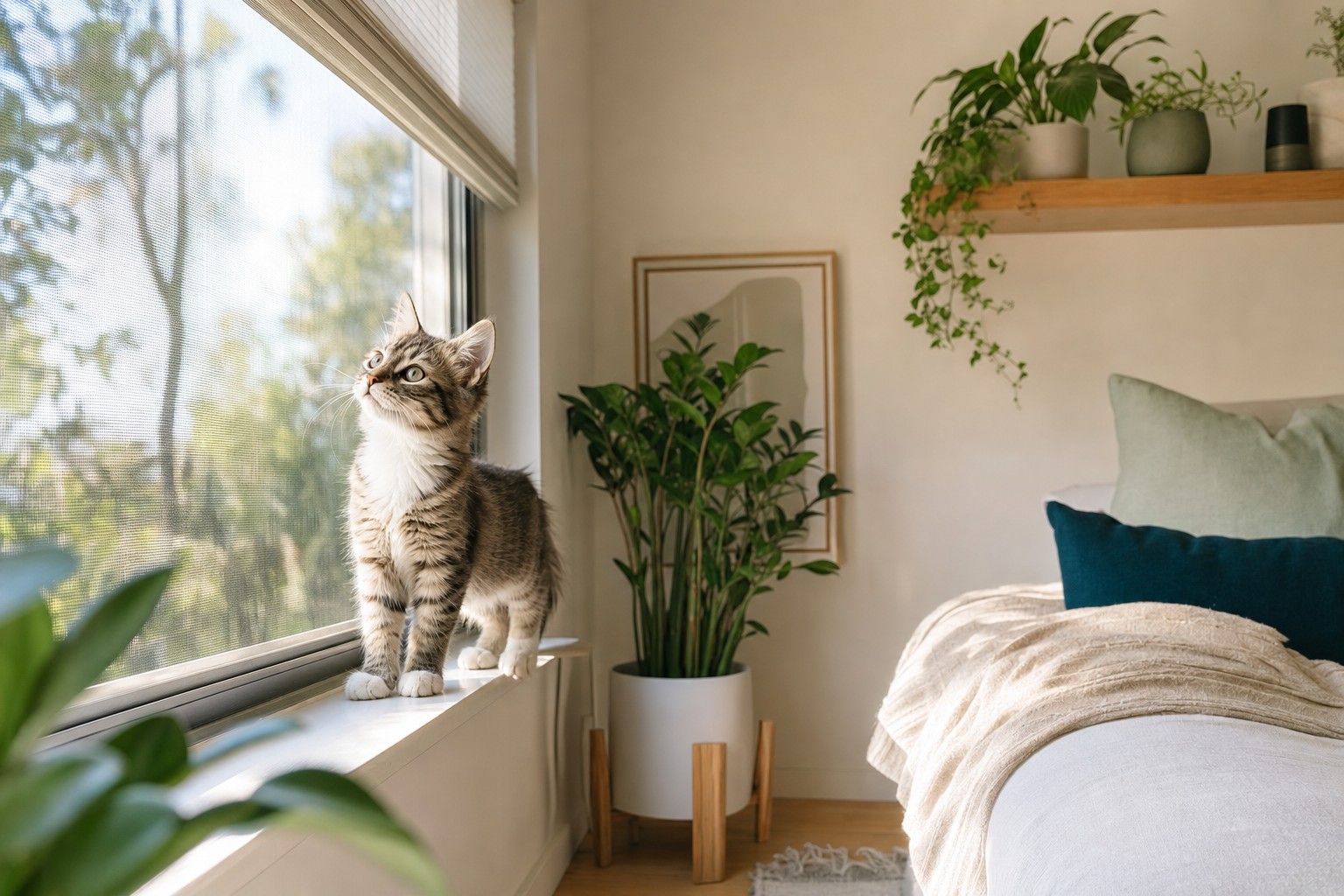
Cat proofing your home means securing the windows and balconies a cat could fall from, removing plants that are toxic to cats (lilies above all), and putting away the cords, strings and small objects a kitten will chew or swallow. Kitten proofing is the same job done lower and tighter, because a kitten fits through gaps an adult cat can’t and climbs almost anything. If there’s a baby in the house or on the way, add a plan for the nursery and the litter box.
Cats explore differently than dogs. They go up. Window sills, the tops of bookcases, balcony rails and the space above kitchen cabinets matter more than the floor.
Cat proofing your home starts at the windows
The ASPCA warns that a cat distracted by what’s going on outside can jump out of an open window or lose its balance and fall. Its advice is to install snug, sturdy screens in every window. The ASPCA also notes that cats and small dogs can slip through childproof window guards, so bars spaced for a toddler won’t stop a cat.
Standard insect screens sit in a light frame held by small clips or tension springs. A cat leaning on the mesh to watch a bird can push one right out. Go window by window:
- The frame should seat fully in its track on all four sides, with every clip engaged.
- The mesh should be tight, with no tears at the corners where cats like to claw.
- On upper floors, heavier pet-resistant screen mesh holds up to claws better than standard fiberglass.
- Screens on sliding windows and doors should lock, so a cat can’t nose the panel open.
Window stops, which limit how far a window opens, make a good second layer. They’re the same devices that keep toddlers from falling, so one installation covers both a cat and a child. Our window safety guide explains how stops and guards work, and how to keep bedroom windows usable as fire escape routes.
In a high-rise condo, treat every operable window as a fall risk for the cat, even one that only opens partway. Screen it, stop it, or keep it closed when the cat is home alone.
Balconies and cat netting
A balcony gives a cat several ways to fall. Cats walk along the top rail, squeeze between balusters (kittens especially), and leap at birds and insects. The simplest rule is to keep the balcony door closed unless you’re out there with the cat.
If you want the cat to use the balcony, enclose it. Cat netting is a clear or black mesh run from the railing up to the ceiling or overhang, usually held by tension cables or clamps, so it closes off the open sides without drilling into the building. Before you order any:
- Check your HOA’s rules. Condo associations often control what can be attached to a balcony, and written approval saves you a removal notice later.
- If you rent, get the landlord’s permission, even for a clamp-on system.
- Move chairs, planters and side tables away from the rail. A cat uses them as steps, and so does a toddler.
- Hang a screen door on the balcony slider so air comes in while the cat stays inside.
Ground-floor homes with a yard can get the same result with a catio, a screened enclosure built off a window or door.
Lilies and other plants that are toxic to cats
Lilies are the plant that matters most for cats. The ASPCA warns that true lilies (Lilium species, including Easter and Asiatic lilies) and daylilies (Hemerocallis species) can be extremely toxic if a cat eats them, and that kidney failure is the main concern. According to the ASPCA, eating even a small piece of a leaf, stem or root, licking pollen off its face or drinking water from a vase that held lilies can be deadly for a cat.
Speed matters. The ASPCA notes that kidney failure is often fatal when treatment is delayed longer than 18 hours after exposure, so call your veterinarian or the ASPCA Animal Poison Control Center right away if you suspect your cat got into lilies.
That makes bouquets the everyday risk. Lilies show up in grocery-store arrangements, sympathy flowers and holiday centerpieces. Ask florists to leave them out, check any arrangement that arrives at the door, and keep daylilies out of any garden bed the cat can reach.
Two plants common in Southern California landscaping are on the ASPCA’s toxic list for cats too:
- Sago palm, which the ASPCA lists as toxic to cats, dogs and horses, with signs that can include vomiting, liver damage and liver failure
- Oleander, which the ASPCA lists as toxic to cats, with signs that include drooling, abdominal pain and diarrhea
Check every houseplant against the ASPCA’s toxic and non-toxic plant database. A cat reaches high shelves with one jump, so moving a plant up doesn’t protect a cat the way it protects a dog.
Cords, strings and small things kittens swallow
Kittens chew and bat at anything that moves or dangles. Charging cables, lamp cords and blind cords all qualify. Route cords behind furniture or through cord covers, unplug chargers when nobody is using them, and tie blind cords up high or replace the blinds with cordless ones, which also protects small children.
Put away anything stringy. Yarn, ribbon, tinsel, hair ties, rubber bands, dental floss and the string on a wand toy left out after play are all things a kitten will chase, chew and try to swallow. Wand toys go in a closed drawer when playtime ends.
Kittens also hide in warm, enclosed spaces:
- Look inside the dryer before every load.
- Check under a recliner before you close the footrest.
- Block the gap behind the refrigerator and stove.
- Keep the toilet lid down until a kitten is big enough to climb out of water.
Cats climb, and climbing furniture can tip. A tall cat tree or a bookcase a cat leaps onto can come down, especially once a toddler starts climbing it too. Anchor tall cat trees and bookcases to the wall with the same hardware used for furniture and TV anchoring.
Cats and babies in the same home
A cat and a baby can share a house well with a few rules set up before the baby comes home.
The nursery
Cats like warm, soft places, and an empty crib is both. Keep the nursery door closed during naps and overnight, and use a video monitor so you don’t have to leave it open. If you want airflow, a screen door hung in the nursery doorway keeps the cat out while you can still hear the baby.
The litter box
The CDC says pregnant women and people with weakened immune systems should not clean litter boxes if possible. If no one else can do it, the CDC advises wearing disposable gloves and washing hands afterward. Once the baby starts crawling, the litter box needs a spot the baby can’t reach, such as a laundry room behind a gate with a cat-sized pass-through door.
Supervision and feeding
The CDC advises always supervising children around cats to prevent bites and scratches. Teach toddlers to pet gently and to let the cat walk away. Cat food left on the floor ends up in toddlers’ mouths, so feed the cat on a counter, a shelf or behind a gate.
Kitten proofing checklist
- Every window a cat can reach has a screen seated in its track with the clips engaged
- Upper-floor windows have window stops as a second layer
- The balcony door stays closed unless someone is out there, or the balcony is netted
- Chairs and planters sit well away from the balcony rail
- No lilies in the house, including bouquets and vase water
- Houseplants and yard plants are checked against the ASPCA database
- Chargers are unplugged, cords covered, and blind cords tied up or replaced with cordless shades
- Yarn, ribbon, hair ties, rubber bands and wand toys are put away
- The dryer, recliners and appliance gaps get checked before use
- Cat trees and tall bookcases are anchored to the wall
- The nursery door is closed during sleep, and the litter box is out of a crawler’s reach
When to call a professional
Screens and window stops get fiddly on older windows, especially the steel casements in Spanish Revival homes and the tall sliders in newer high-rise condos. Getting a stop to hold without cracking a frame takes the right part for each window.
A pet-proofing visit covers cords, gates with pass-through doors, cabinet latches and anchoring for cat trees and bookcases. Our window safety service fits window stops and guards to each window type so they work alongside your screens. If a baby is on the way, a home safety assessment puts the cat setup and the childproofing into one itemized plan.
Sources
- ASPCA: Find Out Which Popular Easter Plant Could Pose a Threat to Your Cat
- ASPCA: ASPCA Urges Pet Owners to Install and Secure Window Screens to Prevent High-Rise Syndrome
- ASPCA: Toxic and Non-Toxic Plants, Sago Palm
- ASPCA: Toxic and Non-Toxic Plants, Oleander
- CDC: Cats, Healthy Pets, Healthy People