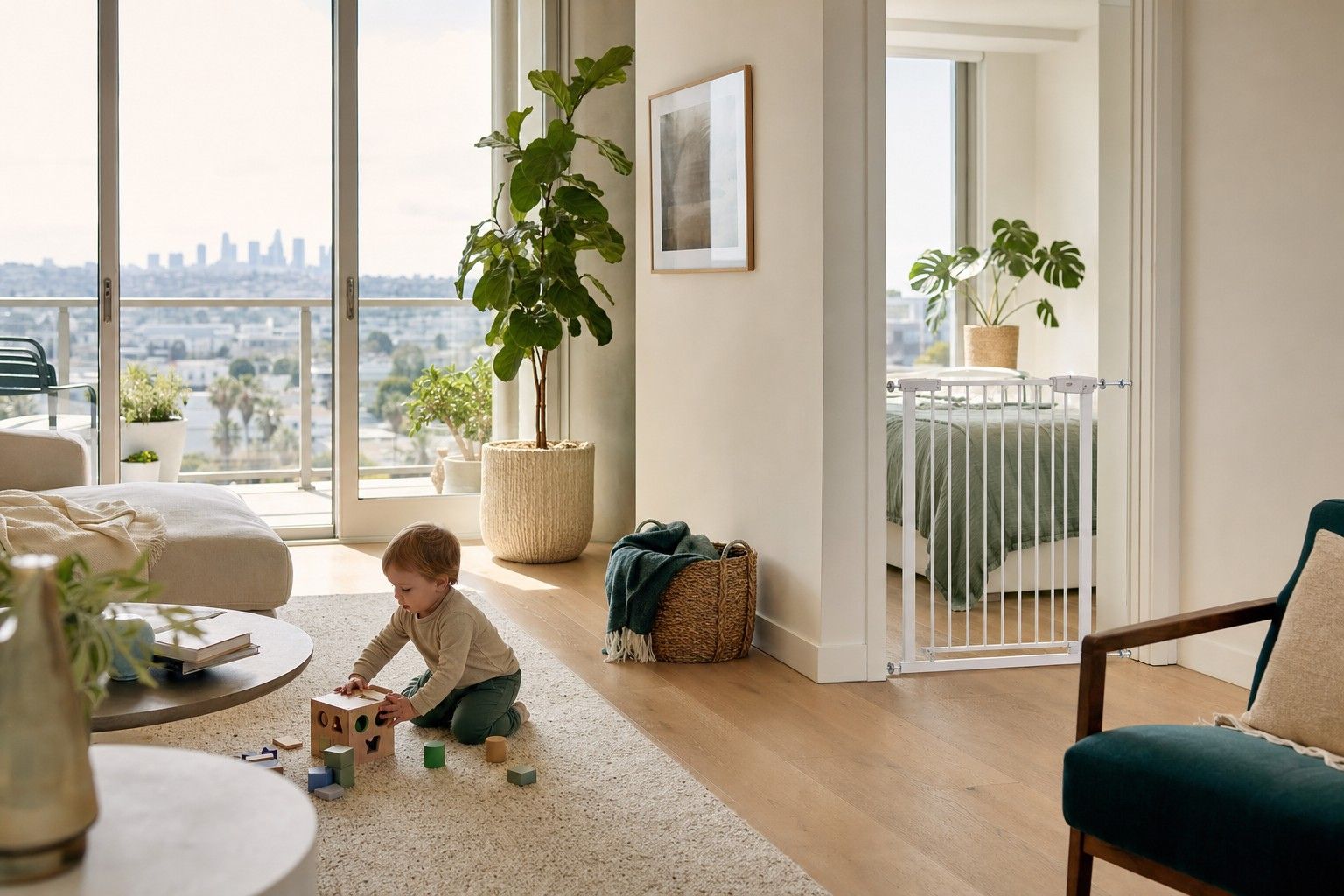
Condo and rental childproofing comes down to two questions: what your lease or HOA allows, and how the place will look on move-out day. Most of a standard childproofing plan can go in without a drill, and the few items that do need screws leave small holes that are easy to fill. We help you choose the right method for each spot and keep a clear record of what went where.
That record matters. When the lease ends, or when you move home after a rebuild, you want every lock and gate removed and the walls ready for paint.
Who this is for
This page is for families renting a house, an apartment or a townhome, and for condo owners who answer to an HOA. It also covers high-rise living, where balconies and big windows bring their own rules.
It’s also for families in temporary housing. Many households displaced by the January 2025 Palisades and Eaton fires are living in rentals while they rebuild, some with a baby who started crawling in the middle of it all. A short-term home still needs to be safe, and we keep the installation light so it comes out cleanly when you move back.
Corporate housing, furnished rentals and longer stays with relatives fall into the same group. If you don’t own the walls, this is the right starting point.
What’s different about childproofing condos and rentals
The first difference is permission. Many leases require written consent before tenants make alterations, and HOAs control common areas and the outside of the building. In many condo buildings the balcony and its railing belong to the association, so even a clear panel attached to the rail may need approval.
The second is the building itself. California requires periodic inspections of wood-supported balconies in many apartment buildings under SB 721 and in condo associations under SB 326. Those inspections cover the structure, not whether a child can squeeze through or climb the railing, so the childproofing is still up to you.
The third is furniture. A furnished rental may come with dressers built long before the federal STURDY Act. The CPSC stability standard that law produced applies only to clothing storage units manufactured after September 1, 2023, so an older dresser in a rental is a strong candidate for an anchor, with the landlord’s okay.
High-rise windows add one more check. Some buildings fit windows with limiters that stop them partway, while others open wide over a long drop, so we test every operable window in the unit before choosing hardware.
What we typically install
- Pressure-mounted gates. For doorways and the bottom of stairs, these hold by tension and leave no holes. The top of a staircase still needs a gate mounted with hardware.
- Adhesive cabinet and drawer locks. Magnetic and latch-style locks that stick on inside the cabinet and come off at move-out.
- Window stops that clamp in the track. Track stops hold sliding windows to an opening of 4 inches or less, in line with CPSC guidance.
- Sliding door locks. A secondary lock placed high on balcony and patio sliders, attached with strong adhesive or two small screws.
- Balcony railing panels. Clear panels or mesh fastened with ties or clamps, once the HOA has signed off.
- Furniture and TV anchors. A few small screws into studs, placed behind the piece where filled holes won’t show.
- Door knob covers and lever locks. Covers that slip over round knobs and locks that clip onto levers, so a toddler stays out of the bathroom, the laundry closet and the front hall.
- Outlet covers and cord management. Covers that press into the outlet or swap the cover plate, plus covers for power strips.
How we work with you
Before anything goes in, we give you a written list of every item, where it goes and how it mounts. You can send it to your landlord, property manager or HOA, which tends to get a faster yes than a vague request. Many buildings also require vendors to book the service elevator or check in at the front desk, so send us the building rules and we’ll follow them.
If the water heater in your unit isn’t strapped, raise it with the landlord. California Health and Safety Code §19211 requires water heaters to be braced, anchored or strapped, and in a rental that is usually the owner’s job.
At move-out, we can return to remove everything, fill the holes and pack up items you want to take along. Our guide to renter-friendly babyproofing covers more ideas you can try on your own.
Related services
Renters and condo owners most often book baby gate installation, cabinet and door locks and window safety, all with low-damage options. For tall furniture and TVs, furniture and TV anchoring uses a few small screws that are easy to patch later.