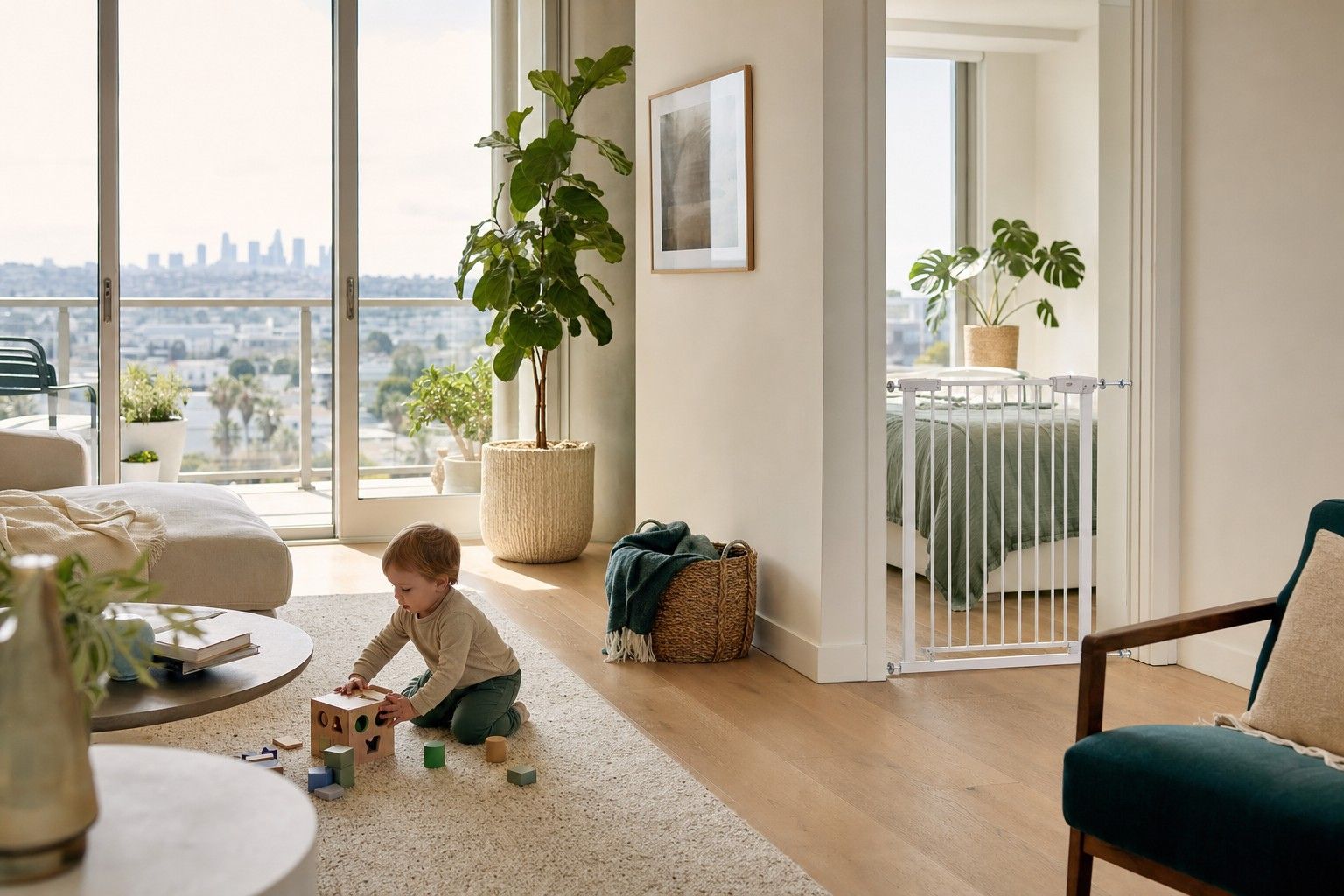
Renter-friendly babyproofing uses gates, locks and anchors that protect a child and come out at move-out with little or no wall damage. For apartment baby proofing, that usually means pressure-mounted gates in doorways, adhesive or magnetic cabinet locks, window stops that clamp into the track, and furniture anchors installed with your landlord’s okay. The one shortcut a renter can’t take is at the top of a staircase, where only a gate screwed into the wall or banister is safe.
Apartments and rented houses come with a few problems a homeowner doesn’t have: a lease that limits changes, shared walls, and often a balcony instead of a yard. The hardware changes, but the goals match any home: block the stairs, lock up chemicals, keep furniture from tipping and keep windows from opening too wide.
Start with your lease and your landlord
Read the alterations section of your lease before you buy hardware. Leases often require written permission for anything that makes holes, and some spell out how repairs have to be done at move-out.
Ask in writing, and be specific. Name the item, the room and the hardware, for example two anti-tip straps on the nursery dresser, screwed into studs, with the holes patched and painted when you leave. A clear request with a repair plan is easier for a landlord to approve than a vague one. California tenants should ask the landlord and check the lease before drilling, even for safety hardware.
The CPSC suggests that renters talk with their landlords about installing window guards. That same conversation is a good time to bring up anchoring and a stair gate. In a condo, the HOA may also have rules for balconies, windows and anything visible from outside, on top of the owner’s rules.
Take photos of walls, cabinets and floors on move-in day. They make the move-out walkthrough much simpler.
Where pressure-mounted gates are safe in a rental
Pressure-mounted gates hold themselves in place by pushing outward against both sides of an opening. They’re the main renter-friendly tool, and they work well in these spots:
- Doorways between rooms on the same floor
- A hallway, to close off bedrooms or a bathroom
- The kitchen entry while you cook
- The bottom of a staircase, to keep a crawler from starting up
They don’t belong at the top of stairs. A child leaning or pushing on a pressure gate can pop it loose, and at the top of a staircase that means a fall. The CPSC’s childproofing guidance says to use only gates that screw to the wall at the top of stairs.
That’s less of a problem for renters than it sounds. A hardware-mounted gate leaves a handful of small screw holes that fill with spackle in minutes. On a banister, mounting kits clamp or strap around the post, so the railing itself doesn’t get drilled. Our guide to baby gates for stairs with banisters walks through those kits.
Check pressure gates once a week. They loosen as they get bumped and rattled, and a gate that slides when you push on it needs to be tightened. Wall cups, small cups the gate’s pressure bolts sit in, help a gate hold on smooth paint and spread the pressure so it doesn’t dent the wall.
Adhesive and magnetic cabinet locks
Most renter-friendly cabinet locks mount with adhesive and leave the cabinet’s outside untouched. The main types:
- Magnetic locks mount inside the door and frame, so nothing shows. A magnetic key held against the door releases the latch. Keep the key in one high, consistent spot, like a hook inside an upper cabinet.
- Adhesive strap latches work on side-by-side cabinet doors, appliances, the oven and the toilet lid. They’re visible, and they come off cleanly with some patience.
- Spring latches screw inside the cabinet frame and leave tiny holes that are hidden inside the box. Some landlords are fine with these, so ask.
Adhesive needs time to bond. Clean the surface with rubbing alcohol, press the lock on firmly, and wait the full cure time printed on the package before anyone tests it with a pull.
The CPSC’s guidance for latches is to choose ones adults can install and use easily, but that are sturdy enough to withstand pulls and tugs from children. It also says to lock away products even when they come in child-resistant packaging. For outlets, the CPSC says outlet protectors should be hard for children to remove and large enough that a child can’t choke on them. Swapping in tamper-resistant receptacles is something to ask your landlord about.
For the locks themselves, our cabinet door locks service uses magnetic and adhesive options that suit rentals.
Anchoring furniture in a rental
A dresser or bookcase tips just as easily in an apartment as it does in a house. The CPSC recommends anchoring TVs and furniture such as bookcases and dressers securely to the wall, and in Los Angeles an anchor also holds furniture in place during an earthquake.
Anchoring leaves a small repair at move-out, usually a couple of screw holes per piece that get filled and touched up. Get permission in writing, use the anti-tip kit that came with newer furniture, and screw into studs where you can. Our furniture and TV anchoring visits match the hardware to the wall so there are as few holes as possible.
If your landlord says no, lower the risk with what you control. The CPSC suggests placing TVs on a sturdy, low base, pushed as far back as possible, keeping toys and remotes out of reach so kids aren’t tempted to climb, and putting heavier items on lower shelves. Choose low, wide dressers over tall, narrow ones, and keep the heaviest clothes in the bottom drawers.
Windows, balconies and sliding doors
Most apartment windows and doors can be made safer without drilling:
- Window stops that clamp into the track of a sliding window keep the opening to 4 inches or less, the limit the CPSC recommends.
- A sliding balcony door can take an adhesive lock mounted high on the frame, out of a toddler’s reach.
- Chairs, planters and storage bins on the balcony should sit well away from the railing, since a toddler will climb them.
- Corded blinds come with a lot of rentals. Ask your landlord about cordless replacements, and tie cords up high in the meantime.
In a high-rise, ask about window guards along with the stops. Our window safety guide explains how stops and guards keep bedroom windows usable as escape routes.
Apartment baby proofing checklist
- The lease alterations clause is read, and permission requested in writing
- Walls, cabinets and floors are photographed at move-in
- A hardware-mounted gate is at the top of any stairs, with pressure gates elsewhere
- Cabinets with cleaners, medicine and knives have adhesive or magnetic locks
- Plug-in outlet covers are the hard-to-remove kind
- Dressers, bookcases and TVs are anchored with permission, or kept low with weight at the bottom
- Sliding windows have track stops, and the balcony door has a high lock
- Balcony furniture is pulled away from the railing
- Original hardware and spare parts are bagged and labeled by room
Patching and removal at move-out
Most renter-friendly hardware comes off in an afternoon. Work room by room:
- Adhesive locks: slide dental floss or fishing line under the base to cut through the adhesive, then roll off what’s left with your thumb or a remover that’s safe for the finish. A hair dryer on low softens a stubborn pad.
- Screw holes: fill them with lightweight spackle, let it dry, sand it flush and touch up with matching paint. Ask the landlord for the paint color, or take a chip to a paint store to match it.
- Pressure gate marks: wall cups and rubber bumpers can leave a ring on flat paint. A damp cloth or a melamine sponge usually lifts it, but test a hidden spot first.
- Swapped hardware: if you changed a cabinet knob or a door stop, put the original back.
Then compare each room against your move-in photos before the walkthrough.
When to call a professional
In a rental, every extra hole is one more to patch, so it pays to get the hardware in the right spot the first time. Call for help with a top-of-stairs gate on an odd banister, anchoring heavy furniture into plaster or concrete walls, or a whole apartment you want done before the baby arrives.
Our baby gate installation service handles hardware-mounted gates and banister kits with the fewest possible holes. For the full picture of how we approach apartments, condos and rented houses, see our page on childproofing condos and rentals.