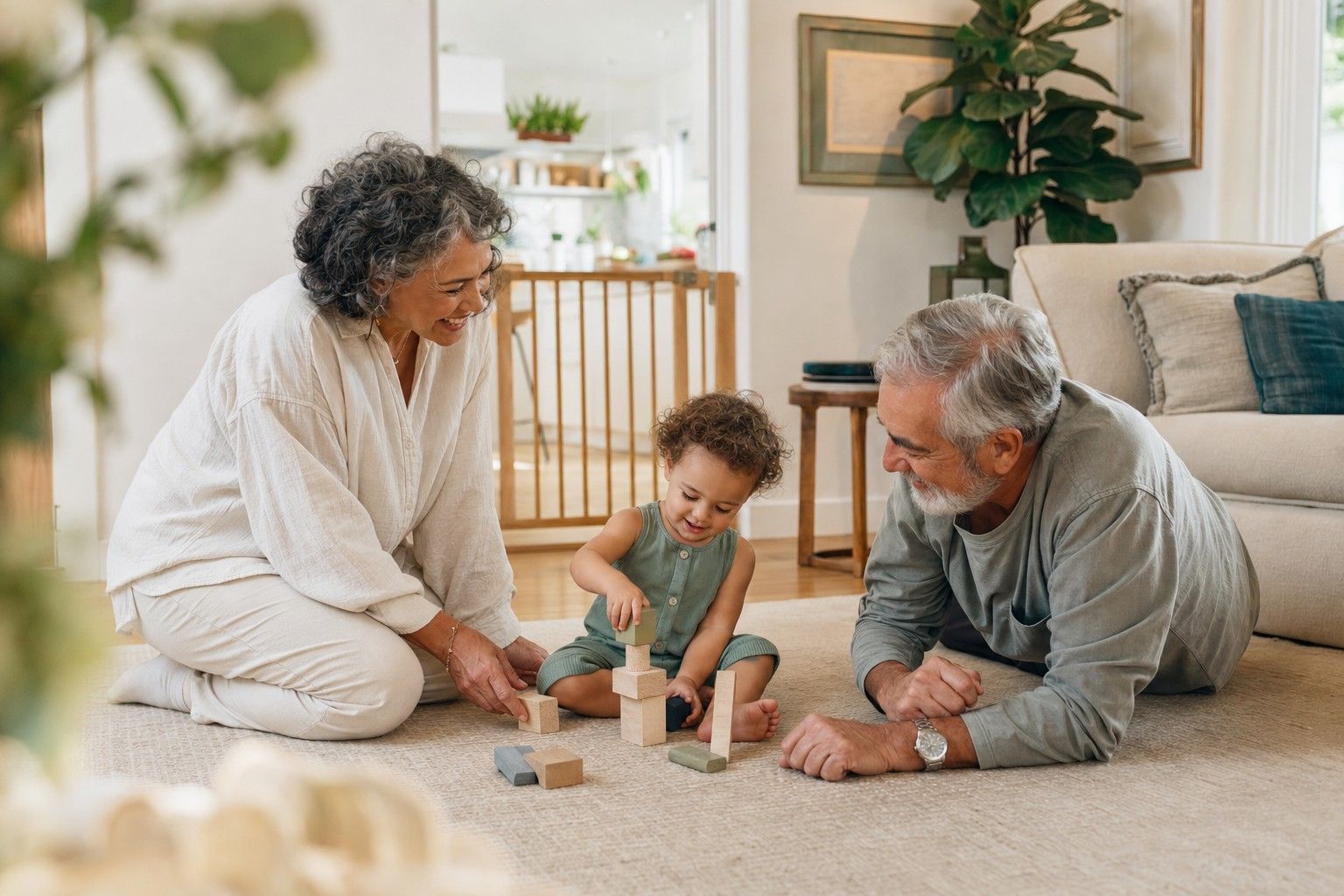
Childproofing a grandparents’ home is a different job from childproofing the house where the baby lives. The grandchild visits for an afternoon, a sleepover or a long holiday, and the house belongs to adults who don’t want it to feel like a nursery. Often the biggest risks are in the medicine cabinet, on the nightstand and at the top of the stairs.
The goal is a home that is safe when the grandchildren arrive and still looks and works like yours when they leave. That means hidden locks where they can stay, removable gates where they can’t, and a plan everyone in the family agrees on.
Who this is for
This page is for grandparents who host regular visits, provide weekly childcare or open the house for holidays and summer stays. It’s also for adult children arranging the work for their parents, since the request sometimes starts with the new parents and not the grandparents themselves.
It fits most kinds of homes, from a single-story ranch to a two-story house with a pool. Homes that haven’t had a toddler in them for decades tend to have the most to catch up on.
What’s different about childproofing a grandparent’s home
Medicine is the first difference. Many grandparents take daily prescriptions, and weekly pill organizers make it easier to keep track, but most pill organizers are not child-resistant. The CDC’s Up and Away campaign advises keeping all medicines and vitamins up high and out of a child’s sight, and reminding guests to keep purses and bags with medicine out of reach. Nightstands, kitchen counters and bathroom vanities are where these usually sit.
Furniture and fixtures are the second. Dressers and bookcases bought decades ago predate the federal STURDY Act, and the CPSC stability standard it produced only applies to clothing storage units manufactured after September 1, 2023. Older corded blinds are common too, and the CPSC says cordless window coverings are the only way to eliminate the cord strangulation hazard.
The third is the people who live there. A gate that stops a toddler can also trip a grandparent, and a cabinet lock that needs a magnetic key is no help if nobody can find the key. Everything we suggest has to be easy for older adults to use, every day, without thinking about it.
What we typically install
- Removable stair gates. Gates that hang on wall-mounted cups and lift out between visits. The top of a staircase always gets a hardware-mounted gate, and many models still lift off their brackets when you don’t need them.
- Locked medicine storage. A lock on one high cabinet that becomes the home for every medicine, vitamin and pill organizer in the house.
- Cabinet and drawer locks. Hidden magnetic or latch locks under the kitchen sink, in the bathroom and in the laundry area, where cleaning products live.
- Furniture and TV anchors. Straps for older dressers, tall bookcases and display cabinets, plus anchors for TVs on stands.
- Window stops. Stops on bedroom and upstairs windows, set to the 4-inch maximum opening the CPSC advises when young children are around.
- Door knob covers and door locks. Covers for doors to the garage, the workshop and the pool, plus a high lock on the slider to the backyard.
- Corner and edge guards. Soft guards for glass coffee tables and stone hearths, removable when the visit ends.
- Earthquake basics. California Health and Safety Code §19211 requires water heaters to be braced, anchored or strapped, and we check yours while we’re there.
How we work with you
We schedule the assessment at a time that suits the grandparents, and the parents are welcome to join in person or by video. We walk the house together, talk through how the grandchildren use each room, and agree on what should stay up permanently and what should come down between visits. You get an itemized plan with the reasoning for each item.
On installation day we show the grandparents how every gate, lock and stop works, and we leave a one-page sheet listing each item and where any keys are kept. As the grandchildren grow, the plan changes, so we can come back when a toddler starts climbing or opening doors.
If the house has a pool, we include the yard in the walkthrough. We don’t install pool fences, but we point out the pool-area risks and explain the state’s drowning-prevention features so you know what to ask a pool contractor.
Related services
A full home safety assessment is the best start for a grandparents’ home, since it covers every room in one visit. Most plans include cabinet and door locks for medicine and cleaning supplies, baby gate installation with removable mounts, and furniture and TV anchoring for older pieces. Our childproofing checklist is a good list to share with the whole family.