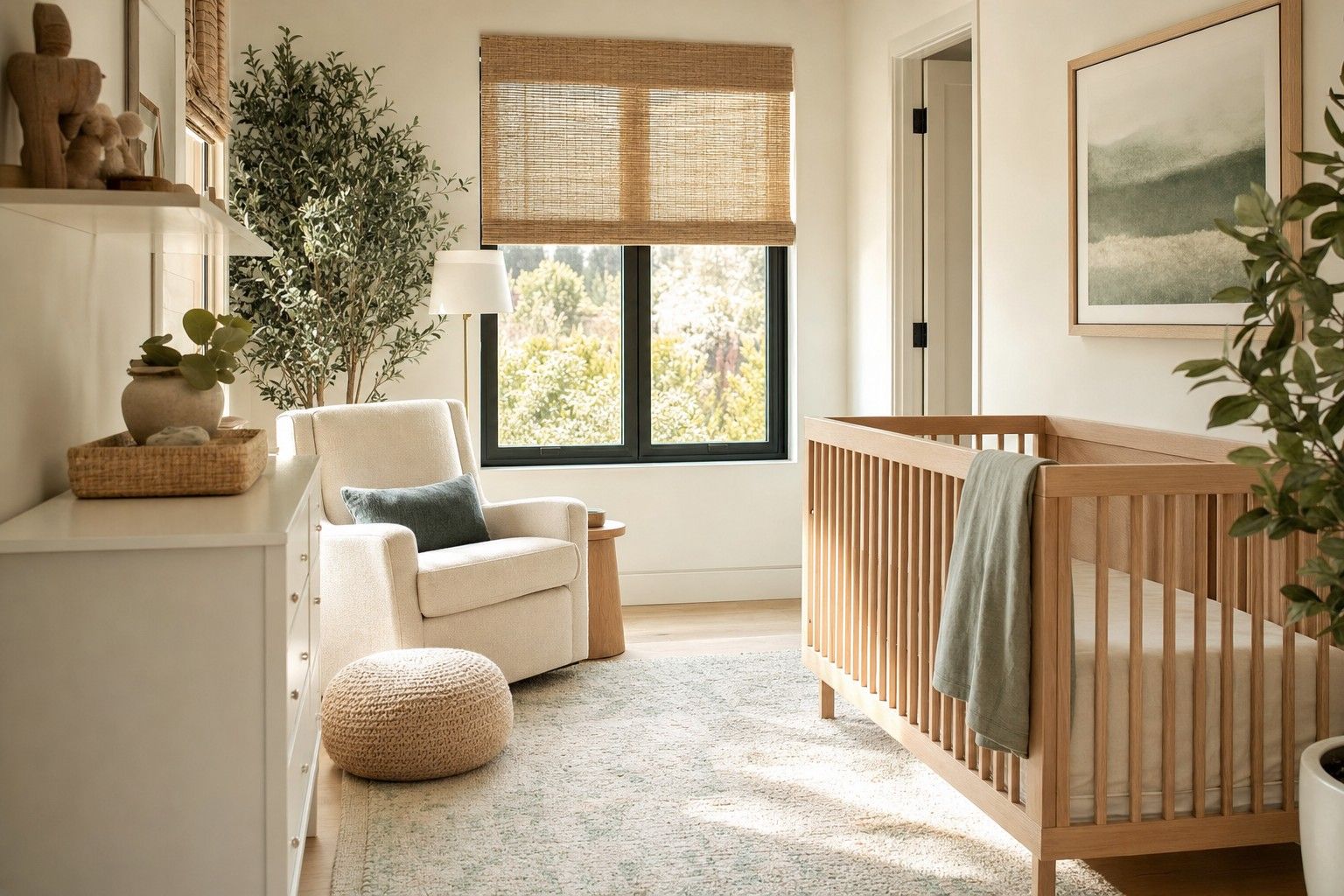
The STURDY Act, signed into law in December 2022, led the U.S. Consumer Product Safety Commission (CPSC) to adopt a mandatory stability standard for dressers, chests and other clothing storage units manufactured after September 1, 2023. Those units must pass tip-over tests that simulate carpet, loaded and open drawers, and the weight of a child up to 60 pounds, and they must ship with an anti-tip device. The CPSC still recommends anchoring dressers to the wall, and dressers made before the rule were never tested to it.
Anchoring matters most for hand-me-downs, vintage finds and nursery dressers made before September 2023. It still matters for new dressers, because a real bedroom has thick carpet, climbing kids and earthquakes.
What the STURDY Act requires from manufacturers
Congress passed STURDY in December 2022 and directed the CPSC to write rules for clothing storage units. In April 2023, the Commission voted 3 to 1 to adopt the ASTM F2057-23 standard as the mandatory rule, now codified at 16 CFR part 1261. It applies to units manufactured after September 1, 2023, and it replaced an earlier CPSC rule that had been set to take effect May 24, 2023.
According to the CPSC, the standard includes:
- Stability tests with the unit placed on carpeting
- Stability tests with loaded drawers and with multiple drawers open
- Tests that simulate the weight of children up to 60 pounds interacting with the unit, to protect children up to 72 months old
- An anti-tip device meeting the ASTM F3096 standard, packaged with the product
- Warning labels with specific statements and pictograms
Which furniture the rule covers
The rule applies to furniture with drawers or hinged doors meant for storing clothing, the kind you’d find in a bedroom. A unit has to meet all four of these criteria to be covered:
- It stands on its own rather than being built in
- It’s at least 27 inches tall
- It weighs at least 30 pounds
- It has at least 3.2 cubic feet of enclosed storage
That takes in dressers, chests of drawers, bureaus, armoires, chifferobes and door chests, and some fabric dressers with drawers. Bookcases, entertainment furniture, office furniture, dining furniture, jewelry armoires, underbed drawer units and laundry sorters fall outside it. A nightstand shorter than 27 inches is outside it too.
Why the CPSC still says to anchor your dresser
The CPSC recommends that consumers anchor furniture, including dressers, securely to the wall. The history behind the rule shows why: CPSC staff knew of 234 deaths from clothing storage unit tip-overs from January 2000 through April 2022, and 199 of them were children.
A dresser built to the new standard is more stable. A real bedroom still throws things at it that a test can’t fully predict:
- A thick carpet pad, or the edge of an area rug under the front legs, tilts a dresser forward.
- Children climb open drawers like stairs, sometimes with two or three drawers out at once.
- A TV on top raises the center of gravity. The CPSC says televisions should only go on furniture designed to hold them, such as TV stands or media centers.
- A packed top drawer pulled all the way out shifts weight to the front edge.
- An earthquake shakes furniture in every direction at once.
The federal rule changed what manufacturers can sell starting in September 2023. It doesn’t apply to furniture already in your home, so anchoring that furniture stays with you.
Older dressers made before the rule
Anything manufactured before September 1, 2023 was never required to meet the mandatory standard. That includes family pieces, vintage and antique dressers, secondhand finds, and many nursery sets bought a few years ago. There’s no reliable way to judge from looking at an older dresser how it would do in a tip-over test, so treat it as untested.
Older pieces need a few extra checks:
- Find the manufacturer and model if you can, and search the CPSC’s recall list. The CPSC continues to work with manufacturers and retailers to recall unsafe dressers.
- Look at the back panel. Many older dressers have a thin hardboard back that won’t hold a screw, so the anchor has to go into the solid top rail or side frame.
- Pay attention to dressers used as changing tables. A changing pad, a baby and a parent leaning on the top all load the front edge.
- Check the drawers. If they pull all the way out with nothing to stop them, fix or replace the slides, since a drawer on the floor becomes a step.
How to anchor a dresser to the wall
New dressers come with an anti-tip device, and the CPSC says to install it right away. For older furniture, the CPSC notes that existing pieces can be anchored with anti-tip brackets. Follow the manufacturer’s instructions for whichever kit you use. The general sequence:
- Empty the drawers and set the dresser where it will live, as close to the wall as the baseboard allows.
- Find the studs with a stud finder, and confirm with a small test hole that will be hidden behind the dresser. A screw into a wood stud holds far better than a hollow-wall anchor.
- Attach the furniture side of the anchor to solid wood near the top of the dresser, such as the top rail, a side panel or the underside of the top. Skip the thin back panel.
- Attach the wall side into the stud at about the same height, so the strap, cable or bracket runs close to level with very little slack.
- If no stud lines up, use a heavy-duty hollow-wall anchor, such as a toggle bolt, rated for the load. In plaster and lath, tape the spot and drill slowly with a carbide bit. In brick or concrete, use masonry anchors.
- Refill the drawers with the heaviest things at the bottom, open the top drawer and pull on it firmly. The dresser shouldn’t rock forward.
- Check the anchor again after every move, carpet change or noticeable earthquake.
On hardware: metal L-brackets and braided steel cable kits suit heavy solid-wood pieces. The plastic straps that come in many kits work when installed correctly, but check them over time for cracks or loose screws.
Furniture anchoring checklist
- Every dresser, chest and armoire is anchored into a stud or with a rated wall anchor
- Bookcases and TVs are anchored too, and TVs sit on stands built for them
- The heaviest clothes and items are in the bottom drawers
- Toys, remotes and treats stay off the tops of furniture
- Drawers have working stops and don’t pull out onto the floor
- Anti-tip kits that come with new furniture go in on delivery day
- Older pieces have been checked against the CPSC recall list
- Anchors get rechecked after moves and earthquakes
Dressers, earthquakes and Los Angeles homes
In Southern California, an anchor does two jobs. It keeps a toddler from pulling a dresser over, and it keeps the dresser from walking across the floor or toppling during an earthquake. Our earthquake-proofing guide covers the rest of the house for families with kids.
LA housing adds a few wrinkles. Spanish Revival and Craftsman homes from the 1920s and 1930s often have plaster-and-lath walls, which take different anchors and more careful drilling than drywall.
In hillside and multi-level homes, a bedroom over a garage or on an older floor may slope slightly, so a dresser can lean forward before anyone touches it. Newer homes usually have drywall over wood studs, where stud anchoring is straightforward. Our guide to anchoring furniture and TVs covers bookcases, media units and wall-mounted TVs.
When to call a professional
Call for help when the dresser is heavy or tall, the wall is plaster, brick or concrete, a TV is involved, or you aren’t sure what’s behind the wall. An anchor set into plaster alone, without a stud or a rated toggle behind it, can pull out under a climbing child’s weight.
Our furniture and TV anchoring service anchors dressers, armoires, bookcases and TVs with hardware matched to the wall type. Earthquake safety extends that work to other heavy items in the house, and a home safety assessment puts every piece of furniture, room by room, into one itemized plan.